
In product management, success is always built at the intersection of strategy, communication, and collaboration - particularly among cross-functional teams. Over my 18+ years in product leadership across various domains and technologies such as GenAI, SAP S4/HANA, SaaS, B2B, BioPharmaTech, HRTech, and Legal Spend Management. I’ve learned that driving exceptional outcomes hinges on how well a product manager aligns the diverse minds behind a product’s lifecycle.
Today’s digital products are complex. They require input from engineering, UX, data science, business stakeholders, marketing, and more. Managing these dynamics demands more than domain expertise—it requires empathy, structure, and the ability to speak many “languages” across disciplines. Here’s what I’ve learned from leading global teams, scaling platforms, and delivering multi-million-dollar innovations.
Leading multi-functional teams
My product journey has spanned multiple industries, each characterized by distinct complexities and strategic priorities. In the field of artificial intelligence, technological innovation, data integrity, and model accuracy are critical to delivering value. In the BioPharmaTech sector, the emphasis shifts to regulatory compliance, clinical validation, and the protection of sensitive patient data. Within enterprise SaaS, the focus lies in designing scalable solutions, driving operational efficiency, and supporting long-term, sustainable growth for large user bases.
Working across these domains has meant leading teams composed of professionals from diverse disciplines and geographies. In today’s global product environment, it's common to collaborate with colleagues spread across multiple time zones - one team member based in Asia, others in India, Europe, or the US. Managing this distribution effectively requires asynchronous collaboration habits, clear documentation, and structured handoffs to ensure continuity without friction.
Equally important is the ability to interact with a wide range of subject matter experts, often within the same project. A typical cross-functional team might include architects, data scientists, QA engineers, backend and frontend developers, legal and compliance SMEs, finance or logistics stakeholders, and external vendors. Each of these roles brings a different language, priority set, and success metric. To keep everyone aligned, I place strong emphasis on early context-sharing, consistent prioritization rituals, and visual planning tools like customer journey maps or swimlane roadmaps.
Ultimately, the ability to lead multi-functional teams rests on creating clarity in a complex system, ensuring that each contributor understands not only their tasks but how their work connects to broader product and business outcomes.
The power of the product trio: PM, Architect, and Designer
One of the most effective structures is the Product Trio: Product Manager, Architect, and Designer. This collaborative model fosters fast, well-informed decision-making and ensures that business value, technical feasibility, and user experience are considered from day one.
- Product Manager – Owns the “why” and “what.” Defines outcomes, manages trade-offs, and aligns scope with business objectives.
- Architect – Owns the “how.” Ensures scalability, performance, and system integration align with the product’s technical vision.
- Designer – Owns the “who” and “how it feels.” Advocates for the user and helps visualize complex workflows into intuitive experiences.
When these three roles work in lockstep, ideation becomes faster, execution more efficient, and outcomes more valuable. This model is a key in delivering real problem-solver outputs and aligning them with strategic business objectives.
Within the GenAI platform, I’ve applied this model directly. I have worked closely with architects to simplify product requirements, user expectations, and business needs while representing them visually through UI and ensuring technical feasibility with tech leads. Together with the architect and UI designer, we reviewed visuals and agreed upon all possible options to ensure the main business and customer needs were met.
Communication on different levels
One of the common pitfalls in cross-functional leadership is assuming one-size-fits-all communication. In reality, executives and developers require very different types of information, and product managers must serve as the bridge.
- Executives need clarity, not complexity. Focus on outcomes, strategic impact, ROI, and risk. Use visuals to show progress against business goals and avoid deep technical details unless requested. At GlobalLogic, when pitching the GenAI solution, I presented the potential value of synthetic data generation in terms of efficiency and differentiation - framing the discussion around business value, not architecture.
- Development teams need detail and context. This includes edge cases, user pain points, prioritization logic, and rationale behind trade-offs. Transparency and consistent backlog grooming build trust. I typically use refined user stories and journey maps that highlight not just what to build, but why it matters to the end user.
Understanding what each group values and how they interpret information leads to more effective alignment and fewer costly misunderstandings.
Aligning product vision with business goals
Aligning the product vision with business goals may sound straightforward, but in practice, it often proves more complex than expected. As PMs, we often serve as translators between business and execution. A well-crafted product strategy serves as a compass for identifying the right direction towards the product vision and ensures alignment on product objectives, target market needs, and business goals. Here are five practical tips for achieving this alignment:
1. Top-down: business-focus, not features
Before shaping the product vision, product managers should anchor themselves on the business objectives. What is the company’s mission? Is it a growth strategy - acquisition, retention, upselling, or maybe market positions and expansion? If your product strategy vision doesn’t support that core initiative, priorities will drift. This is where frameworks like OKRs, North Star and Opportunity Solution Tree might help - they map ideas directly back to business objectives with measurable results. Start with what the company needs to achieve, find opportunities, and then shape solutions to serve them. Or use a North Star metric that gives everyone one clear measure of success. These methods keep daily work connected to long-term goals.
Opportunity Solution Tree Example:

North Star Diagram Example:

2. Bottom-up: customer-centric focus
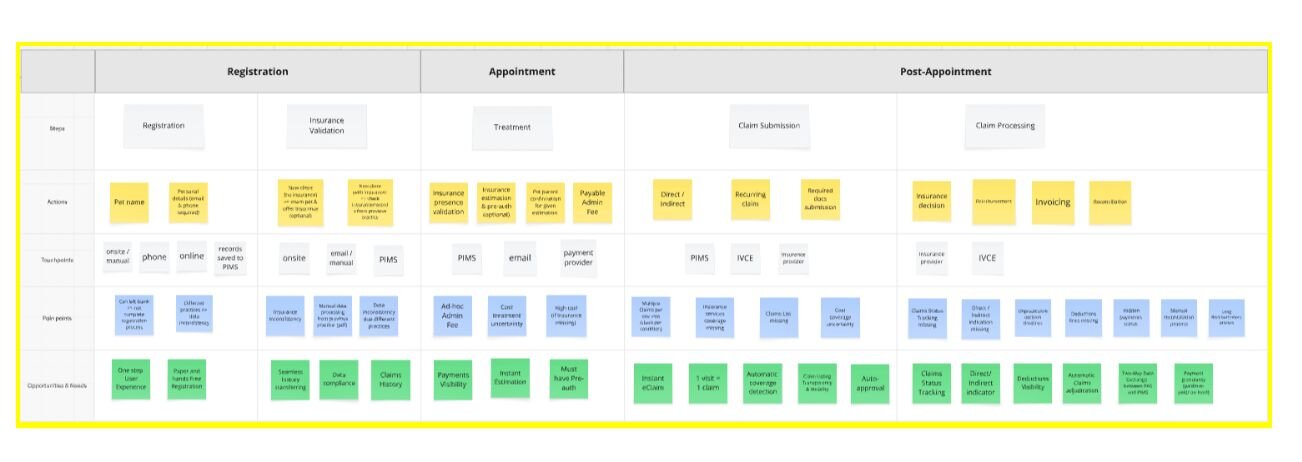
It’s how we understand our customers and focus on the customer's paint points, analysing customer’s user journey and bringing real value. Here we usually perform quantitative and qualitative analysis, being empathetic and synthesizing insights into functional capabilities. Next - how these insights align with business objectives and strategic goals? Do they fulfill the current business direction and drive the product strategy?
Customer Journey Map Example:

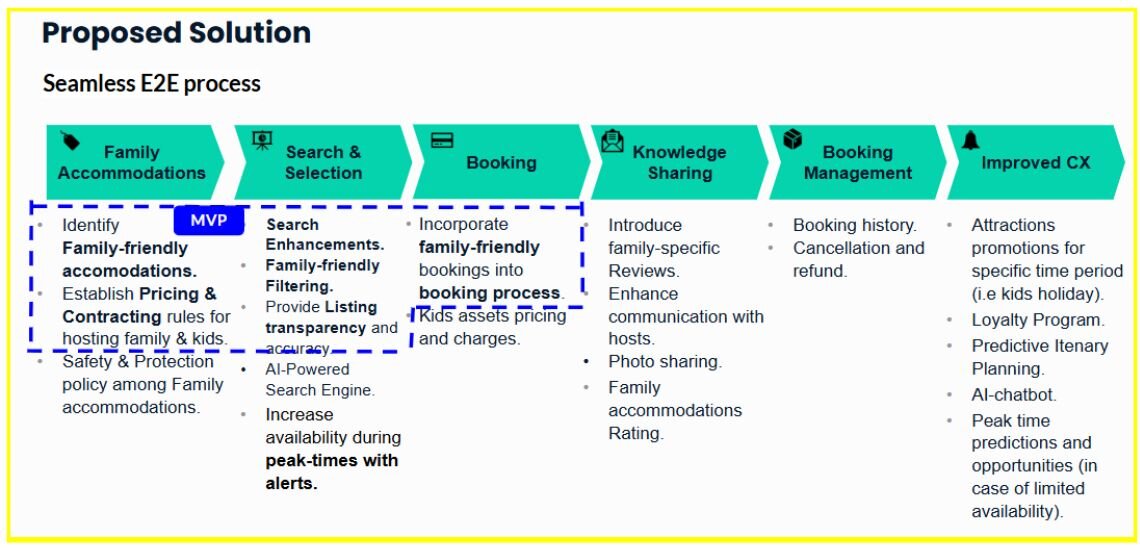
One More Customer Journey Map (other project):
3. Make strategy actionable with roadmap
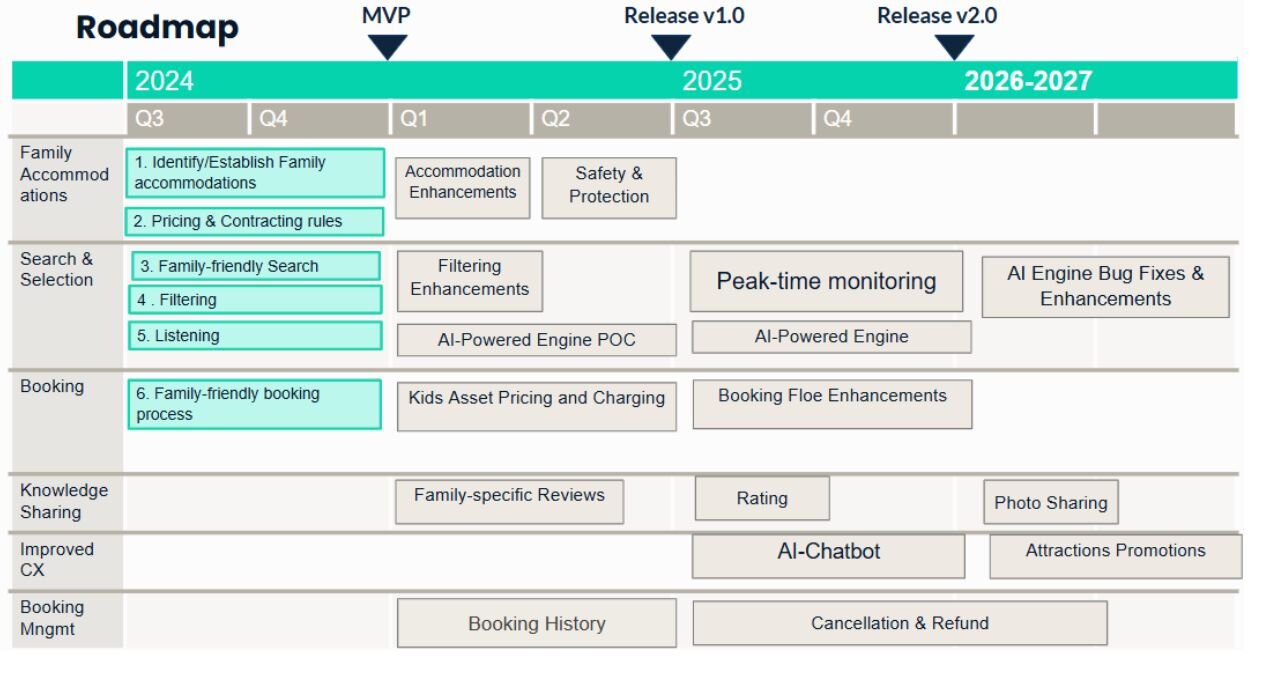
Compiling top-bottom and bottom-up insights together brings you to strategic planning based on live feedback. However, the product strategy on its own isn’t enough. It needs to drive clear results. Link your strategy to the product roadmap to close the gap between big-picture plans and sprint-level tasks. Break your long-term product strategy (12-24 months) into outcome-based quarterly goals, then define what you’ll deliver next. Organize your roadmap around strategic themes (such as “Expansion” or “Retention”), not just features. This makes it obvious how every backlog item ties back to a bigger goal. A flexible roadmap makes it easier to adapt when priorities shift, keeping top-down goals and ground-level execution in sync.
Roadmap Example:
4. Engage stakeholders early and continuously
Strategic alignment is not a one-time meeting - it’s an ongoing conversation. Involve key stakeholders (e.g., sales, finance, marketing, compliance) during discovery, not just review. Their input ensures that product goals reflect market conditions, customer expectations, and regulatory constraints. Establish a shared language through product briefs or strategy one-pagers to keep everyone anchored.
Final thoughts: your product is only as strong as your team
Product management is not just about features, frameworks, or tools. It’s about people—how they collaborate, communicate, and create. Great product managers don’t just manage scope - they build the culture and systems that allow cross-functional teams to succeed. Whether you're building AI solutions, healthcare platforms, or enterprise SaaS, your ability to lead across functions will define your product's success. It’s what turns ideas into outcomes.
And if you're just starting to explore this journey: focus on clarity, empower your team, speak everyone's language and never underestimate the power of a well-functioning Product Trio.
