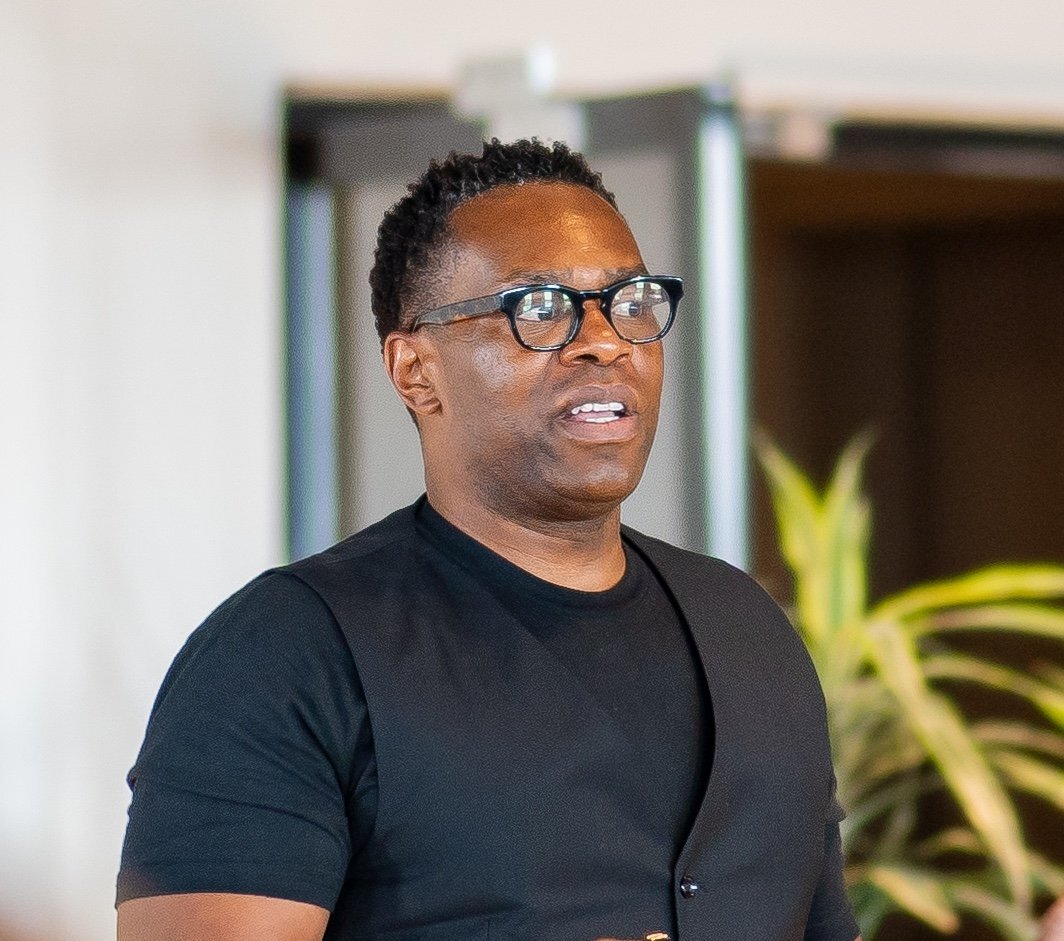

Product Coach Chidi Afulezi introduces DPIA, a context model created to equip teams building products amid the realities of African markets.

In my last article for Mind the Product on what I learned about building products in Africa, I started with an anecdote about a veteran technician who knew exactly where to tap to fix a problem that was taxing the team. I've been spending time since then talking to product veterans and builders doing that tapping across the continent. I collected those hammers, including mine, into a playbook called DPIA: Doing Product in Africa.
What DPIA Is and Why It Matters
DPIA is a context model for building products across African markets.
A context model is different from an operating model. An operating model gives you the full arsenal to create value: how teams should be structured and empowered, how product strategy connects to company strategy, how discovery and delivery work, how product leaders coach and develop their teams, how product decisions get made, and how the entire organization transforms and orients around delivering value.
A context model is the custom mod kit you use to apply that product operating model in a specific environment. It provides the proper lenses, the adjustments, and the factors you must account for that the base model doesn't address directly. And when calibrated correctly, it informs the operating system: the workflows, rituals, tools, and processes where the actual work happens.

I want to be clear that the operational foundations of product management have been well documented, particularly by Marty Cagan and the Silicon Valley Product Group, whose work on the product operating model remains the global reference. Those foundations are practical and proven, and I advocate fully for the product operating model in my work. DPIA doesn't replace the product operating model; it calibrates it for African terrain. If the product operating model is the engine, DPIA tunes it for the unique environment that is the continent of Africa.

Why does this matter? What makes Africa so unique from other environments that it requires its own context model? DPIA is critical because frameworks built in high-trust, data-rich, infrastructure-stable environments encounter friction when transplanted to Africa and its 54 distinct markets and contexts without modification. The friction is rarely about technical incompetence, unwillingness to adopt the models, or a lack of ambition. It simply stems from misalignment with operating realities. DPIA addresses that misalignment directly, starting with a set of principles that ground everything else in the model.
First principles of doing product in Africa
DPIA is anchored on seven core principles. These principles emerged from building and coaching product teams across African markets, and from the practitioners doing the work on the ground every day. They are operating truths, meant to be internalized. These principles are what translate the theory of product into practice on the continent.

These principles show up in the work of teams across the continent. M-Pesa's origin story illustrates proximity. Initially funded as a microfinance loan repayment tool in Kenya, the pilot data might have suggested failure if judged by standard banking metrics. But the team's proximity to the field revealed something unexpected: users were hacking the system to send money to each other, bypassing expensive informal courier networks to get funds to relatives in rural areas. A remote team looking only at loan repayment rates might have killed the product. A team with proximity to the user saw the behavior that would come to revolutionize mobile money.
These principles guide the work and the decisions. But they operate within an environment that determines the terrain.
Navigating the Operating Environment
In African contexts, any experienced product builder will tell you the environment co-designs the product. What you can build, how it reaches users, and whether it delivers value reliably are all shaped by forces outside the product itself in a uniquely demanding manner.
Several forces shape this environment, including market realities (addressable market, informal economy), operating conditions (infrastructure gaps, regulation, multi-country complexity), and resource realities (funding structures, talent dynamics, volatility)

Three realities deserve particular attention:
The addressable market reality: Africa now has about 1.5 billion people. Many teams make product cases as if they will capture a big chunk of that number. Only a small fraction of Africa’s 1.5B people have reliable disposable income for non-essentials, and that spending clusters heavily by city, income, and infrastructure across 54 economies. The rest are not a viable starting market. This applies in B2B as well. Most enterprises are informal, micro-scale, or operating on margins too thin to pay for new products. A successful product strategy requires accurate sequencing; typically starting where revenue exists, building sustainability, and then expanding.

The informal economy is the operating system of most African markets: Roughly 85% of jobs in Africa are informal, according to the International Labor Organization, one of the highest rates in the world. This is how economic life happens for the majority, and products must accommodate this reality. Solutions that assume formal structures (formal addresses, credit scores, registered businesses, etc) exclude the majority of potential users. Moniepoint in Nigeria understood this. Their agent network uses shopkeepers and traders who are already trusted in their communities. For many users, the agent is the primary interface.
Political and economic volatility are design constraints: In African markets, currency shifts, sudden regulatory changes, and political transitions are entrenched operating conditions. Currencies can move double digits in a quarter—in Nigeria, the naira dropped more than 15% in under two weeks in May 2024. Regulations evolve as you build. Products designed with flexibility absorb these shifts through plays like adjustable pricing, multiple country and currency options, and modular compliance. For instance, teams building on the continent that ask during the design process, "what happens to our pricing if the currency drops tomorrow?", build resilience into the product from the start.
A lucid understanding of the environment is necessary. The next question is whether your organization is equipped to respond to the environment and build in it.
Organizational readiness
Organizational readiness is the internal counterpart to the operating environment: mindsets, leadership, and structures that can adapt and operate in a product way. In my work as a product coach across the continent, this is the hardest gap to close, given the sales-driven and senior-stakeholder-driven (aka “Oga driven”) culture that dominates product building in Africa. Many organizations adopt the visible markers of product work: product manager titles, discovery sprints, roadmap templates, OKRs on the wall, and more. This is product theater, not real product culture. There is a great deal of vocabulary adoption, but consistently across the board the product culture does not walk the talk. Product culture shows up in behaviors like how leadership responds when discovery contradicts their assumptions, what work gets funded, and what problems get prioritized in product strategy.
DPIA provides some diagnostic questions to cut through the theater:
- When was the last time discovery findings changed a leadership decision?
- When was the last time a product initiative was killed based on evidence from the field?
- Are product teams enabled to find the solutions to the problem(s)?
- How many of your product managers are actually project managers with a different title?
- Can a product team say no to a leadership request? Has it ever happened?
- When an initiative is struggling, what questions does leadership ask first?
If reading these questions creates discomfort, that discomfort is the diagnostic. The gap between what organizations say and what they do is where product work stalls. In my experience, it is also where the biggest gains are possible.
In an environment where the product practice is relatively nascent, closing that gap requires capability-building: product coaching for leaders, training for teams, forums where teams learn from each other. Much of the work in African contexts involves shifting how leaders define progress, fund learning, and support teams through uncertainty.
With the environment understood and organizational readiness addressed, the focus shifts to what teams are actually building. This is where “ship gets real”.