
Did you know the average baby gets through 6,000 nappies before they stop needing to use them? Did you also know that, despite the urgent warnings about how harmful it is to the planet, we’re still using more and more plastic with each year around the sun? And did you know that you can absolutely start a sustainable babycare business with zero experience in product management?
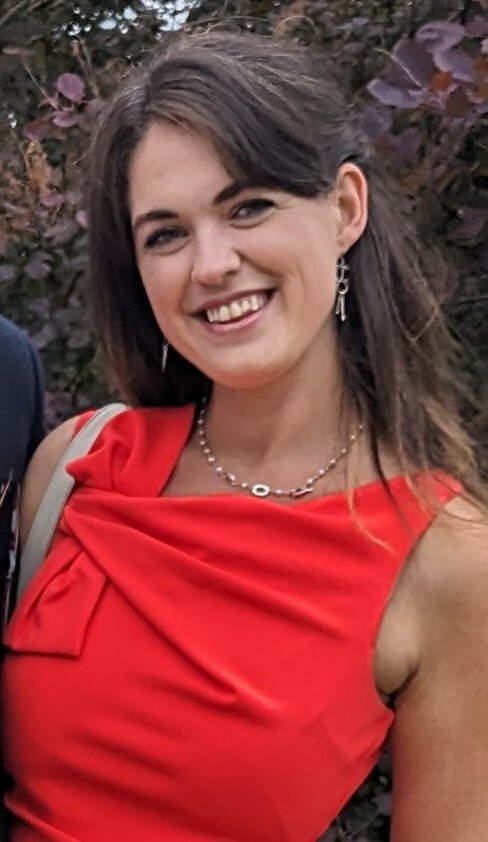
Here at Mind the Product, we love a story about unusual routes into product management. So what better than to chat to Laura Crawford, CEO of sustainable babycare brand Mama Bamboo.
Laura chats to us about coming up with her product idea and launching her business – and shares all the tips she’s picked up along the way.
From product idea to business launch
Don’t let your career background put you off
Speaking to Mind the Product, Laura said: “My career pre-Mama Bamboo was completely unrelated. I was a management consultant in the City working in the banking industry and mostly focusing on HR systems and procurement systems.
“So my work was kind of in IT systems and trying to make them work for people and improve their work processes. And in the very latter stages I started focusing a lot more on people strategy and the future of work, flexible working and those kind of areas.”
Be inspired, utilise your network
While Laura didn’t have any direct experience in product management, she said she was inspired by her father.
“My father has been in the world of creating, manufacturing and importing products for 40-50 years. So I spent a lot of time asking him questions and actually utilising a lot of his network. He helped me to understand processes like materials assessment, manufacturing and supplier selection as well as how you go about developing a product, having a product made into a prototype, and testing it. I'd say my dad helped me immensely, running me through how you go about doing product development successfully.
Use your own personal experiences
When Laura had two children, two years apart, she ended up discovering a gap in the market while she was on maternity leave.
She said: “I realised the amount of waste and plastic involved in the early years of a child’s life and in particular, nappies, was huge. It was the fact that, not only were they plastic and really, really bad for the environment, but the plastic nappies were making my children’s skin sore.
“But when I switched to more plant based nappies at the time I found that they leaked. And basically in a moment of absolute frustration, I started saying it can't be that hard. Like you must be able to make a sustainable product that also works.”
With that, the idea for Mama Bamboo was born.
Decide on the problem you want to solve, then create the product
As a first port of call, Laura started looking into materials that could potentially be used to make a fully sustainable and functional nappy. Through research, she discovered that bamboo was often used in nappies and related products in Asia.
“They’ve been using bamboo in their nappies and clothing for decades and they know that it works, particularly in warm and humid climates.
“I wanted to bring this to nappy products here in a really sustainable way. I wanted a product that allowed nappy waste to compost down and return to the soil rather than hanging around for thousands of years.”
Not only was Laura keen to create a genuinely sustainable nappy product that functioned well, she was also interested in returning much-needed natural nutrients to the soil.
“The way we currently do plastic nappies isn’t good – wrapping them in a plastic bag to dispose of them and then burying them in the soil. Not only are you putting plastic in the soil, but you're trapping all those natural nutrients at a time when our soil is becoming really nutrient poor” Laura explained.
“We’re breaking a natural cycle that has happened for thousands of years. We really need to change the way we're treating our soil.”
The result: Laura created a product that was solving a number of important problems all at once.
Tackle challenges and build your business
With the advice from her father and support from those around her, Laura launched into building the business that was to become Mama Bamboo. She said the tough part came next as she didn’t have any experience of marketing and selling a product.
“The marketing has probably been the area I have had to self-teach the most on,” Laura said.
She added that her and her business partner, Jenny, “are no longer the target audience of the products they are selling”, which has made it harder.
Laura said: “When I first started developing the nappy and was looking to launch the business I had young children, my little one was only two. Now I'm no longer talking to myself in terms of marketing. I'm talking to somebody 10-15 years younger than me.
Developing and refining your product
Testing
When she was coming up with her initial ideas for the business, Laura described how she had to think outside the box and work with what she had.
“Pretty much all of my product testing was done on my own children and children from the playgroup that my children went to. Any samples and prototypes would go to the 15-20 parents I knew from the playgroup and I would just ask them to give honest feedback.
“It worked well because I knew these people, they were my friends and they gave me honest feedback. I got a lot of initial product testing and research done in this way. It’s become much more formal since we’ve developed and grown the business, of course, as we’ve now got a much bigger market and we have to do a lot more product testing. We test our products in lab conditions and then with a set of product testers here in the UK that we pay for.
So we’ve got a lot more formalised with it, but in the early days I would literally just go out to my friends.
Developing
Laura said that the first iteration of Mama Bamboo’s nappy was not the one they sell now. The nappy, just like the business itself, has been on a journey, working with its partners such as Why Matters.
Laura said: “Although the first version of our nappy was 100% chemical-free and chlorine-free and had sustainable packaging, it actually had a polyethylene liner to it. It was a plastic liner inside the nappy and it wasn't until probably about six months down the line that I became aware of compostable material.
“They were basically initially made of this biodegradable polyethylene and this material required specialist conditions to break it down. The scientific community discovered that the material that we were all using wasn't as eco friendly as we all were led to believe initially.
“And then Europe then went ahead and banned oxo biodegradable materials.”
Laura explains how, following this research and the law change, they had to adapt and change what their nappy was made from.
Laura said: “So we then had to switch and use a material that does compost in the normal way, and it doesn't require any specialist conditions. So we switched the liners in the nappies.”
Since its inception, Mama Bamboo has also expanded its nappy range, going down to a size zero for premature babies all the way up to size 7 pull-up nappies, up to toddlers of two to three years old. The business has also launched wipes and a babycare range.
“We created the wipes because I became very aware of the chemicals that are involved. I wanted to create a wipe that was both gentle on the skin and gentle on the soil.
“And just recently we've launched our bath time range, which is our shampoos and lotions and body washes. I sample on my own children. They are quite prone to eczema and sensitive skin and I realised that so many of the children's products have loads of synthetic fragrances and chemicals in them, like even the ones that you think are nice.
“When you dig into them, they're not pleasant things that you would want to put on your baby’s skin. We worked with Beauty Kitchen, which is a fellow B Corp out of Scotland, to develop a formula.
Pricing and marketing
One element of Mama Bamboo that has been tricky, according to Laura, is working out how to price the products.
“One of the biggest struggles most eco brands have is pricing – because the products cost so much more to make because, for example, of the raw materials, the ethical requirements, using solar energy, and paying for a B Corp membership and FSC membership etc. With us, for instance, it costs a penny to make a plastic nappy, but our nappies cost 10 to 20 times that amount – but we can’t charge 10 to 20 times more money for them. In fact, we’re only about 10 to 15% more expensive than Pampers. We have to squeeze our margins.”
And on marketing themselves as an eco brand and amplifying that message, Laura said it’s also quite difficult to find the right tone.
“We want to tell people that you don’t get anything for free,” Laura said, “if you want fair trade and better materials you have to be willing to pay for it. You have to understand that if you’re paying hardly anything for clothes, for example, then somewhere along the supply chain someone hasn’t been paid fairly.
“But at the same time, nobody wants to be made to feel guilty or lectured to, or told they're making a really crappy choice for the world. People don't like that message. So you sort of have to avoid lecturing people while somehow managing to say ‘but we need to be better, please make a better choice’.”
Find a purpose
Laura described how, as a business, they’re “always trying to be one step ahead of the eco world”.
She said: “While everyone else is thinking about recycling plastic, which we know doesn’t really work, we’ve gone fully circular. So when somebody finishes a bottle of shampoo, they can post it back and the bottle gets completely rewashed and reused exactly in the same format. So it has the smallest carbon footprint of any kind of packaging.”
When asked what sets Mama Bamboo’s products apart from other brands, Laura said: “So I think our products stand out because we're like the real deal, that's the truth. When we say we’re plant-based, we mean 100%, we don't mean 20% or 30%. When we say we’re lined with fully compostable liners, we mean it. We don't actually mean a little bit of them are lined with that and most of it's just plastic. So I think anyone buying our products can at least have that reassurance that you are literally getting what we're saying you're getting.”
Of course, challenges come as part of the package and one of those is the growing presence of greenwashing.
Laura said: “So many companies greenwash and it means people have lost confidence in eco brands. People just think everyone is lying about how eco they are. It’s a really difficult space to be in.
“My advice for brands is just to stick to the truth. Stick to the facts. And then you can’t greenwash. And then you just hope that people will get more and more savvy as time goes on. People are getting wise to greenwashing, they’re getting more annoyed with it and they’re willing to do a bit more research into the products they’re buying.”
Laura says her dream is a world in which every single product has an ethical rating displayed on its packaging. “I’d love to see a world where, instead of us getting slammed for saying anything eco on our products, everyone has to be completely honest on their packaging.”
On advising others wanting to build a purpose-led business, Laura said: “I'd say first of all, make sure you know what your purpose is, what your mission is, and what it is that you're interested in doing. Do a bit of research. Look into all the kinds of additional certifications and legal requirements and things that you're going to have to do to achieve what you want to achieve.”
Final thoughts
So what does a typical day look like for the CEO of an eco babycare brand and a mum of two?
Laura said: “I drop my kids off at school and then I either work from the home office or I work from our little office out of the University of Hertfordshire. And then at some point I stop work, go and pick up my kids, and then I work in the evenings when they've gone to bed. So that's kind of my standard life in terms of what I do during the working week.
“In terms of the work itself, honestly, my days vary so much. But as an example, I might spend time filling in an NHS tender online. I can be dealing with a bit of product design, marketing, sales, finances, or a supplier audit. Literally it could be anything. There’s three of us, and we all have to muck in with everything. I have a to-do list as long as my arm!”
When asked about advice she has for people wanting to take that next step and build a business, Laura said: “I'd say this to anybody that's got a really good business idea. Get on with it. I think too many people have a good idea but something stops them from pursuing it. Life stops you, earning a bit more on the corporate ladder stops you. Somebody telling you it's a rubbish idea stops you. But you’ll always regret what you didn't have a go at. You won’t regret giving it a go.
“Even if it ends up not working out, at least you’ve tried. You've had a good go after it. Don't put your entire livelihood on the line of course! But have a go.”
When asked about final thoughts she wanted to share, Laura said: “I think it's just reminding people that we're still over-using plastic. We're still producing more plastic every single year. And less than 9% of the plastic we buy has been recycled. And even when you recycle a plastic, guess what? It's still plastic. It might get recycled into another plastic or tarmac, but it's still here on Earth and the last thing this world needs is more tarmac.
“We could really do with weaning ourselves off oil-based plastic. So even though that message is getting out there, it's not affecting the way we're shopping or consuming enough. This needs to change. And we know that deep down. So anything that reminds people we're not making a lot of headway on this and we need people to join in is a good thing.”

Keep reading
Meta scraps third-party fact checking in favour of community notes
What to do when it's time to pivot in product: Lessons from Bumble
SUNDAY REWIND: Product leadership at News UK by Jo Wickremasinghe
Product vs business outcomes – an independence story