
At #mtpcon London 2025, Nesrine Changuel, a seasoned product leader with over 10 years of experience at Google, Spotify, and Microsoft, shared her deep insights on building products that not only meet functional needs but also create powerful emotional connections with users. Her session was a masterclass on how delight—the emotional engagement that users feel with a product—can drive long-term product success. Watch the video in full or read on for our key takeaways!
Building happiness into your product
The talk starts with a simple yet profound question: What makes a meal memorable? It’s not just the food, the presentation, or the company—it’s the emotional experience, the "peak moment." Nesrine highlights that the same applies to products. In her own experience, a business dinner in Stockholm turned into an unforgettable moment not because of the food but because of how the bill was handled—a simple, non-awkward moment that stood out in her memory. This, she explains, is the essence of delight: it transforms a mundane experience into a deep emotional connection with users.
Why emotional connection is crucial for product success
Drawing from her experience working on global products like Skype, Spotify, and Google Meet, Nesrine shares a powerful conclusion: “Successful products value the emotional connection with users.”
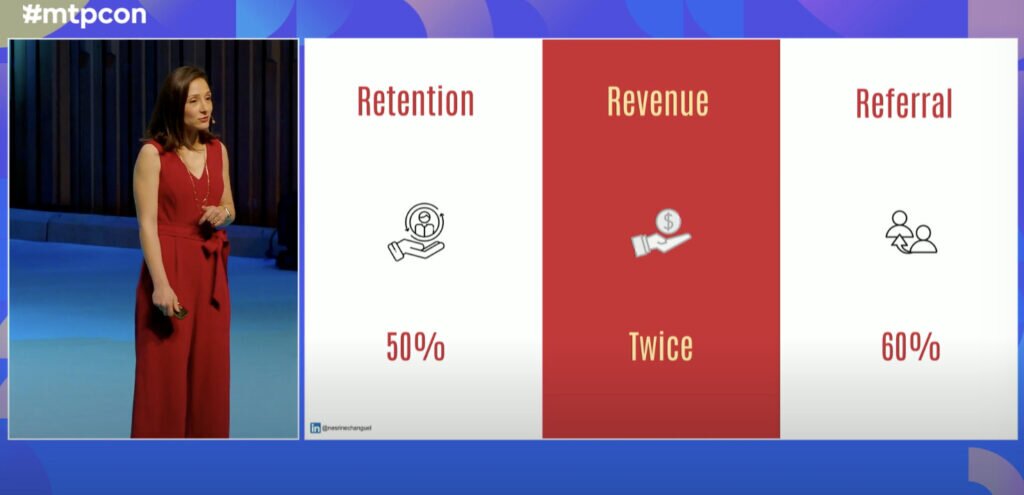
Nesrine highlights studies conducted by top firms like Capgemini and McKinsey, which demonstrated that emotionally connected users are 50% more loyal, twice as likely to purchase more, and 60% more likely to recommend products.
The Delight Framework
How can product managers deliver this experience to users? That’s where the Delight Framework comes in. Nesrine outlines a simple yet effective method for integrating emotional connection into product processes through four steps.
Identifying Motivators: First, understand why users choose your product. Are they motivated by functional needs (e.g., booking a flight, listening to music) or emotional needs (e.g., feeling less lonely, expressing themselves)? Understanding these motivators is crucial to designing products that solve problems and resonate with users.
Turning motivators into opportunities: Once motivators are identified, the next step is to convert them into product opportunities. Nesrine demonstrates this with her time at Google Meet during the pandemic when user feedback showed a need for a more engaging and alive digital meeting experience. This insight led to the introduction of features that improved meeting interactions and reduced the feeling of Zoom fatigue, boredom, and low interaction.
Using the Delight Grid: Nesrine introduces the Delight Grid to decide which solutions would create delight. This tool helps organise potential solutions based on whether they address functional or emotional motivators. Products that address both types of motivators fall into the "deep delight" category, offering the highest emotional and functional impact.
Improving solutions for greater delight: Even if your product features start as low delight (functional), there are tools to enhance them. These include personalisation (e.g., tailored recommendations like Netflix), celebration (e.g., positive reinforcements like Airbnb’s Superhost status recognition), humanisation (e.g., creating more relatable experiences like Dyson’s product enhancements), and seasonality (e.g., adding themed backgrounds in Google Meet during holidays). These strategies take a product from good to great by ensuring that every interaction feels personal, special, and memorable.
Nesrine’s personal experience at Google Chrome illustrates how addressing both functional and emotional challenges leads to a more delightful product. A simple solution like organising tabs helped users feel less stressed about clutter and more in control of their experience. This, in turn, increased user satisfaction—demonstrating that even small changes can impact the experience of users.
Delight is essential for every product
As the talk concludes, Nesrine drives home a critical point: delight is not just a "nice to have"—it is essential for standing out in a crowded market. She highlights that delight doesn’t only apply to B2C products but also to B2B products. Every product, regardless of its audience, should strive to honour the emotions of its users.
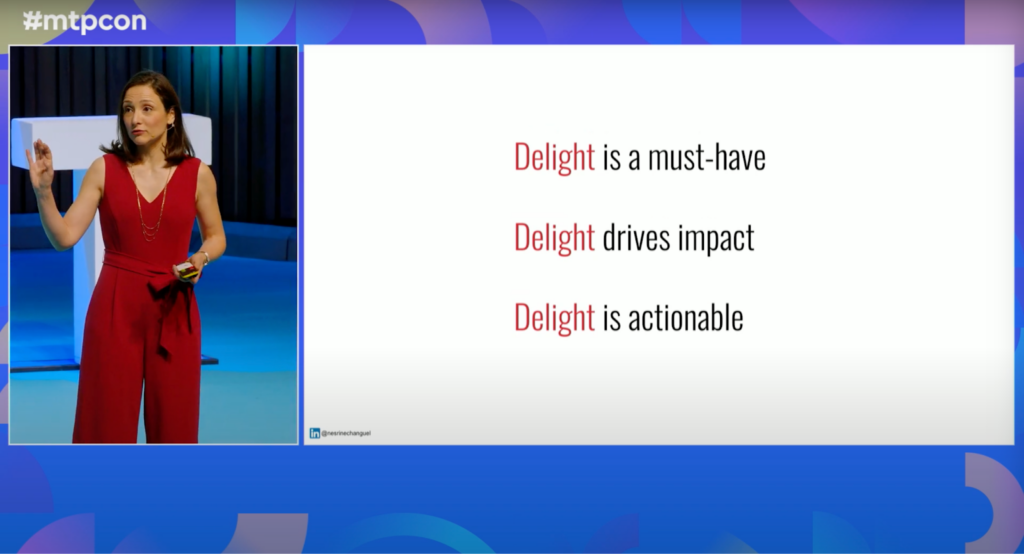
Finally, Nesrine encourages the audience to take a fresh look at their product roadmaps and assess how they can incorporate delight into their designs. The delight framework, she notes is actionable, and with the right mindset, any product can move beyond functionality and create deep emotional connections that drive long-term success.
Catch up on more great talks from #mtpcon London 2025!

Keep reading
Surviving the perfect storm: How hardware PMs can beat the AI tax and trade tariffs
January's top product management reads on Mind the Product
How to start a sustainable product business: CEO Laura Crawford on growing her brand from scratch
What the GPT-5 launch teaches product managers