

At the INDUSTRY conference in Cleveland, Ohio, hundreds of product people worldwide came together for three days of networking, inspiration, and product goodness. Here are a few things that we learned from day one. Read on for a quick refresher, or to find out what you missed!
When Your CEO Ships Faster Than You
Kicking off the day, Oji Udezue, Co-Author of Building Rocketships, painted a vivid picture of the “three-speed problem” facing today’s product teams.
The challenge? Discovery is moving 2-3x faster, building is accelerating up to 10x thanks to AI, but go-to-market still lags. That mismatch leaves product teams with feature graveyards, confused roles, and frustrated leaders.
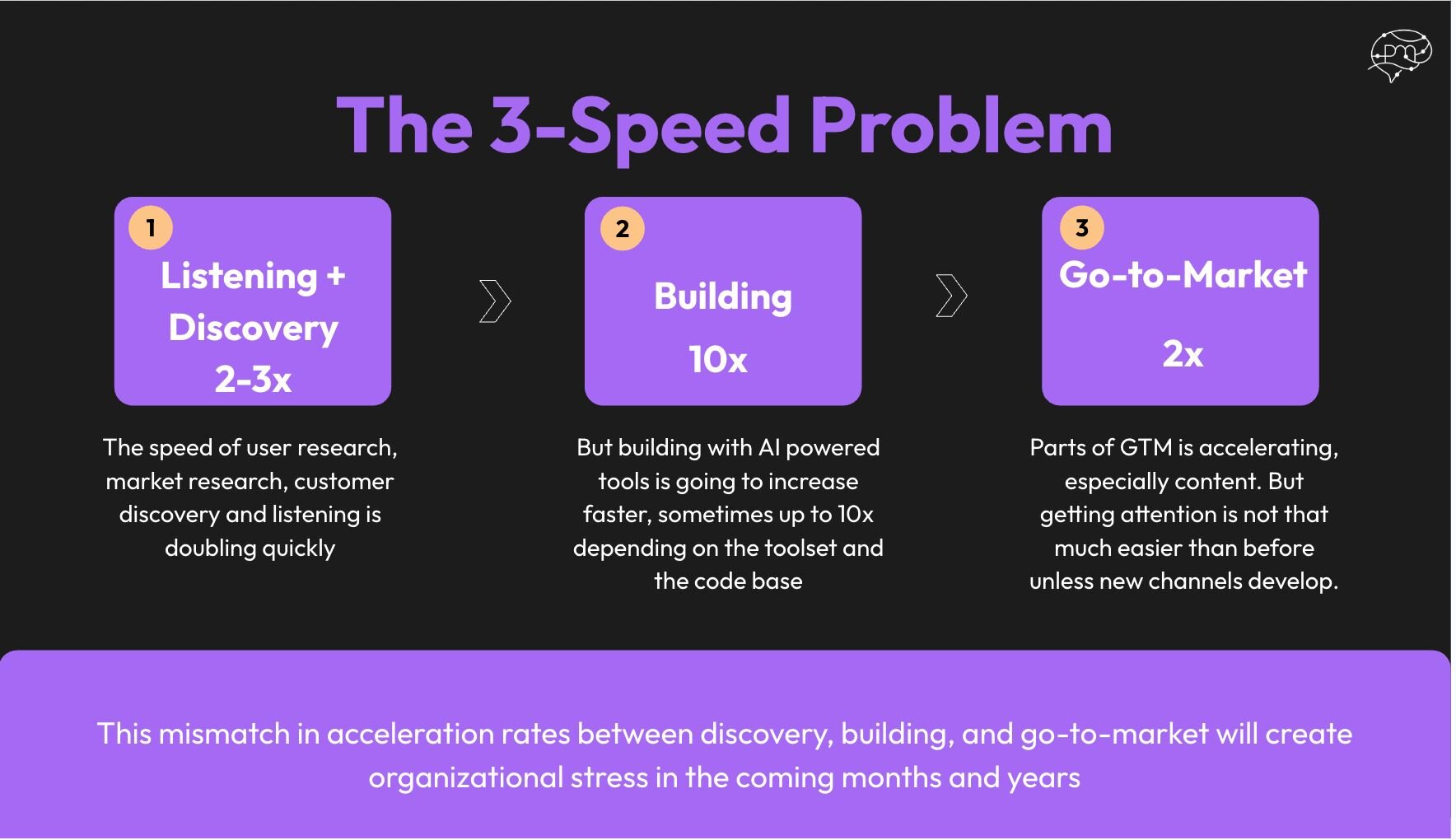
Oji’s answer is to rethink how we work, with new skills. Centralise customer listening, treat prototypes as the new PRDs, and fuse product with go-to-market so launches keep pace with builds.
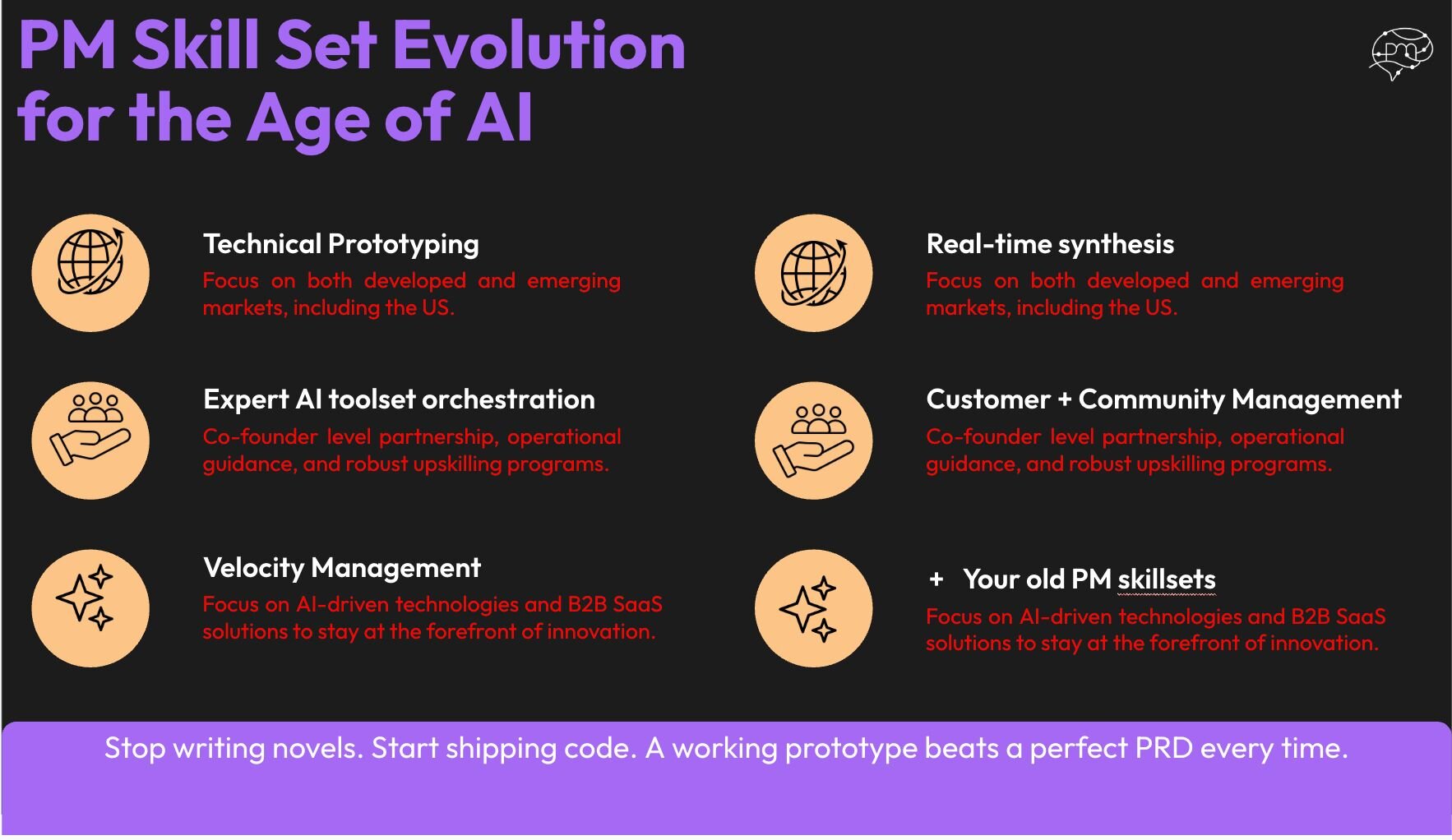
Oji stressed how a product manager distributes their time is their biggest impact on their success.
Timeless lessons for product leaders
Leading a great reflection session straight after Oji was Brent Tworetzky, SVP Product at Peloton. He shared four timeless lessons from his years in product leadership.
- Lesson 1: Know Your Business Engine: You need to focus on the problem people are willing to pay to solve.
- Lesson 2: Refocus Org Design Regularly: Push the best people to focus on the biggest business level.
- Lesson 3: Invest in winning features and products: Brent learned at Chegg that he could have improved by improving the main thing, rather than constantly testing many new things.
- Lesson 4: Break Process Rules: There are times when process becomes a shield against uncertainty, and a boat anchor on speed.
Making AI a force multiplier
After the morning keynotes, we moved to the Talk Shop stage, where Axel Sooriah, Atlassian's Product Manager, took the mic to discuss making AI a force multiplier.
He observed that product managers aren’t worried about AI taking over their jobs. They’re mostly concerned about building the right AI features.
So how do you move from anxiety to agency? Axel walked us through three practical ways to make AI a genuine force multiplier across the product lifecycle.
1. Turn context into superpowers. Build context libraries. Curate sets of product knowledge (strategy, insights, specs, ways of working) so AI tools can generate relevant outputs. Axel demoed how these libraries can also automate desk research, saving hours every week.
2. Evaluate with context. Instead of manual reviews, use AI as a coach or sparring partner.
3. Generate artefacts with context. Finally, AI can help teams create prototypes, specs, and user stories that are not just faster, but sharper. Axel showed how workflow tools like n8n, paired with Confluence and Jira, can spin up wireframes and prototypes that accelerate discovery while keeping alignment intact.
The clear takeaway from Axel’s session is that AI is here to free them up to focus on what matters most: discovery, alignment, and strategy.
Speaking CFO
After the break, we returned to the main stage for some hard truths on influencing a product person: unpacking building financial fluency, Elena Luneva, former CPO at Braintrust.
“It turns out that Finance is the universal language of business,” she explained. “While product managers often speak about customers and features, executives listen to revenue, ROI, and costs. That gap is why so many good ideas die in the boardroom.”
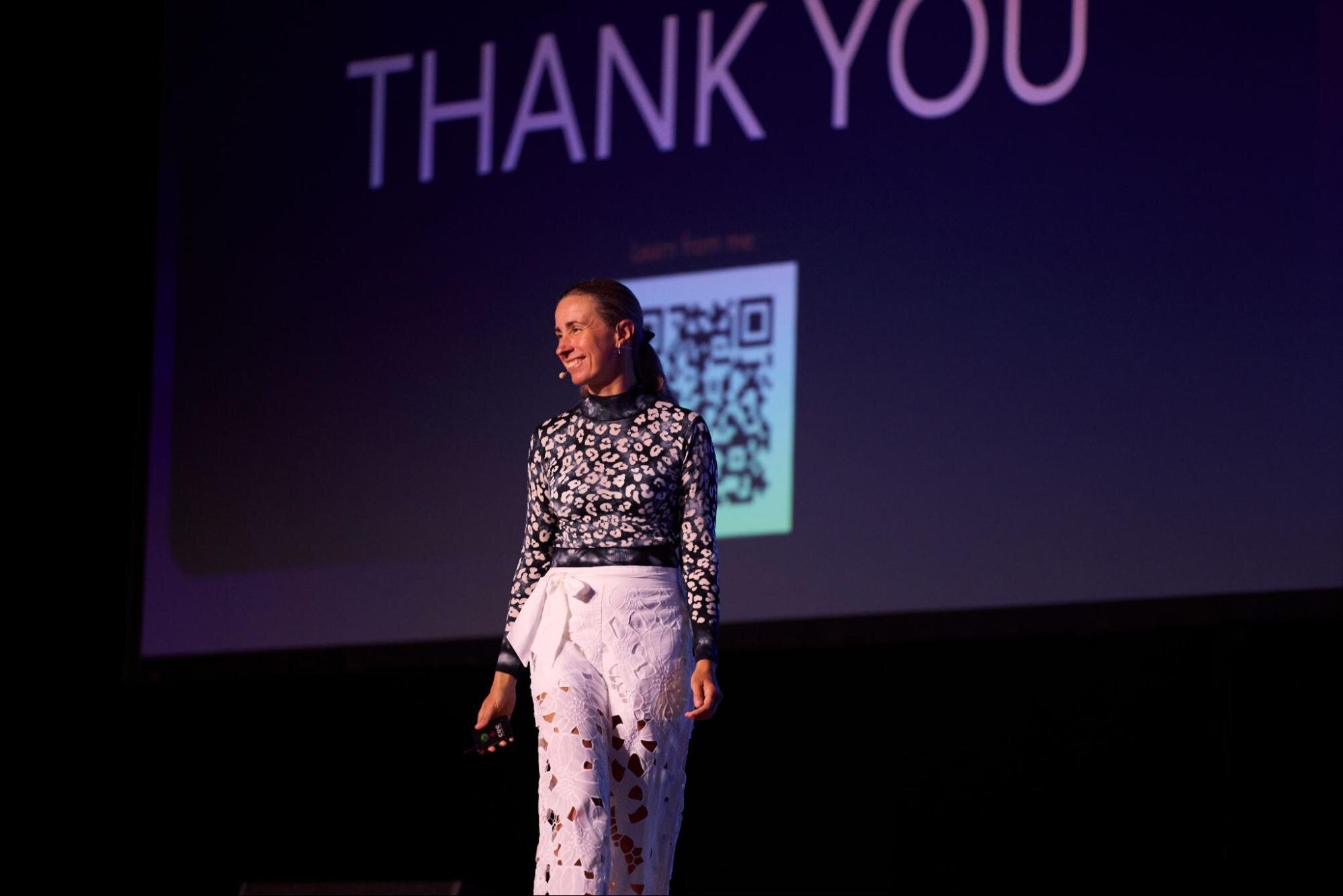
Elena outlined two key tools to bridge the gap: revenue modelling (start with funnels instead of features) and business case modelling (make the ROI explicit across short-, mid-, and long-term horizons). Her examples showed how different a message sounds in “product speak” versus “finance speak”, and why only the latter gets executive traction.
She explained that if you want to earn executive trust, you need to translate product metrics into business metrics.
Speed of learning: building smarter product teams
Straight after Elena’s finance-focused session, we stayed on the main stage to hear from Vrushali Paunikar, CPO at Carta, who reminded us that great product teams are at the core of great products.
At Carta, the atomic unit of the organisation is the customer problem. She explained that teams are built and measured around the problems they solve. This shift has shaped how they hire, prioritise, and use AI.
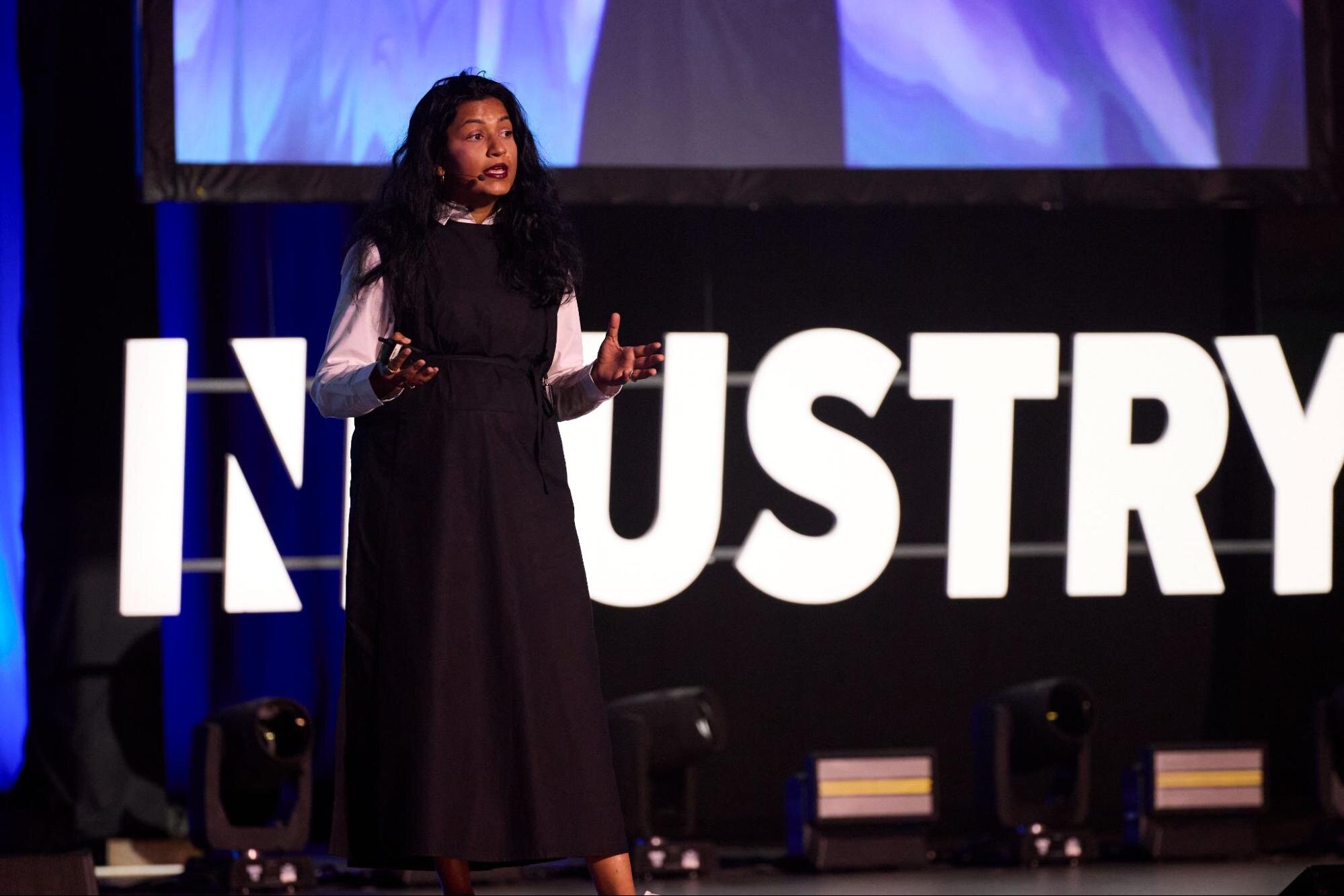
When looking to build effective problem-first teams, Vrushali highlighted how these teams avoid politics, focus on outcomes, and organise around sequencing rather than endless prioritisation. That means doing fewer things at once, getting products into customers' hands faster, and letting learning compound.
She also underlined the value of constraints. Little progress was made when Carta threw money at problems in 2021–22—refocusing on constraints forced creativity, iteration, and leverage. As she put it, efficiency is minimising effort, but leverage is maximising outcomes, and product managers thrive by creating leverage.
Powering AI with integrations
Next on the Talk Shop stage was Shensi Ding, Co-Founder and CEO of Merge, who taught us about AI integrations.
She explained that AI features only deliver real business value if they’re fuelled by huge volumes of high-quality, customer-specific data. The problem is, however, that data is scattered across CRMs, HR systems, ticketing platforms, and beyond. Integrations are the pipelines that make it usable. Without them, your AI product is blind, she noted.
Shensi shared how this plays out in practice with enterprise search. Instead of manually digging through Slack threads or Intercom tickets, integrations allow AI to pull all that data into one place, giving teams accurate, contextual answers in real time.
But integrations aren’t easy. They’re costly and time-consuming, require cleaning and validation, and must respect data permissions. That’s why Merge exists: to give teams access to 220+ integrations with ongoing support from build to maintenance.
Ready, Fire, Aim: building at the speed of AI
Back at the main stage, Prerna Singh, Avaaz's newly appointed CPO, gave a practical session on how AI is reshaping the way we build products without losing the most important ingredient: the human side.
“AI is basically a golden retriever: eager, loyal, and has exactly zero product sense,” she said, reminding us that while AI can accelerate, only human judgment, values, and product sense truly drive innovation.
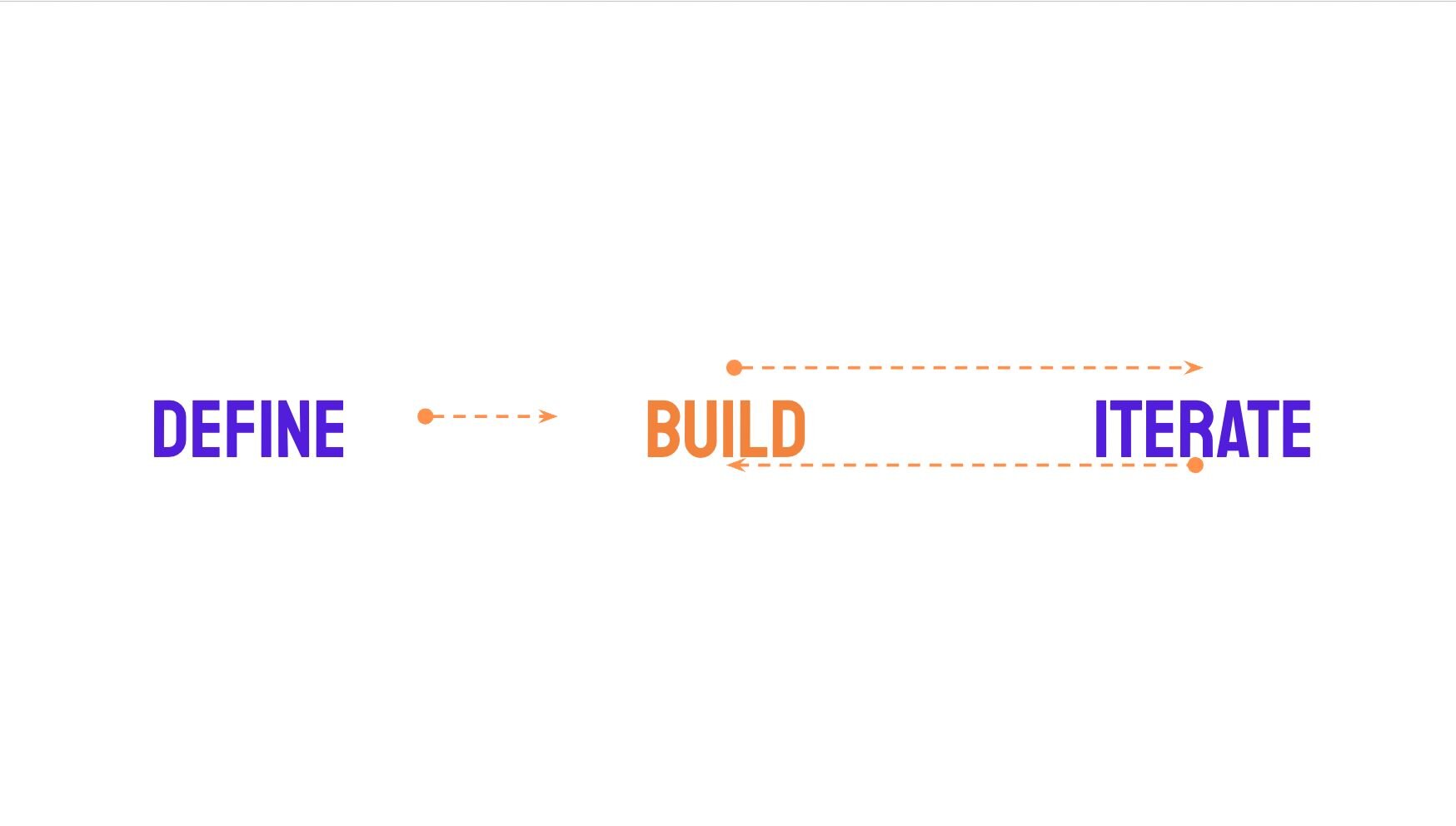
Prerna walked us through how AI collapses the traditional product cycle. Instead of the linear define, design, develop, deploy process, AI enables teams to define, build, iterate with feedback loops measured in hours and days. That shift frees product managers from chasing tasks and lets them focus on impact.
De-risking big bets to drive impact
Closing out the afternoon talks was Michelle Parsons, CPO and Co-Founder at Lex, who shared a master class on making big bets while also delivering quick hits.
Great strategy is nothing without great execution, and execution is where things often go wrong, Michelle explained. Too many teams get stuck working on too big, incremental, or under-validated initiatives.
Michelle introduced the Balanced Portfolio Framework:
- Quick Hits: low-cost learning opportunities
- Small Bets: improving existing products
- Big Bets: bold moves that create competitive advantage
The trick is to use quick hits and small bets as stepping stones to de-risk big bets, gathering evidence, building confidence, and bringing stakeholders along. She suggested an 80/20 split: 80% investment in quick hits and small bets, 20% in big bets.
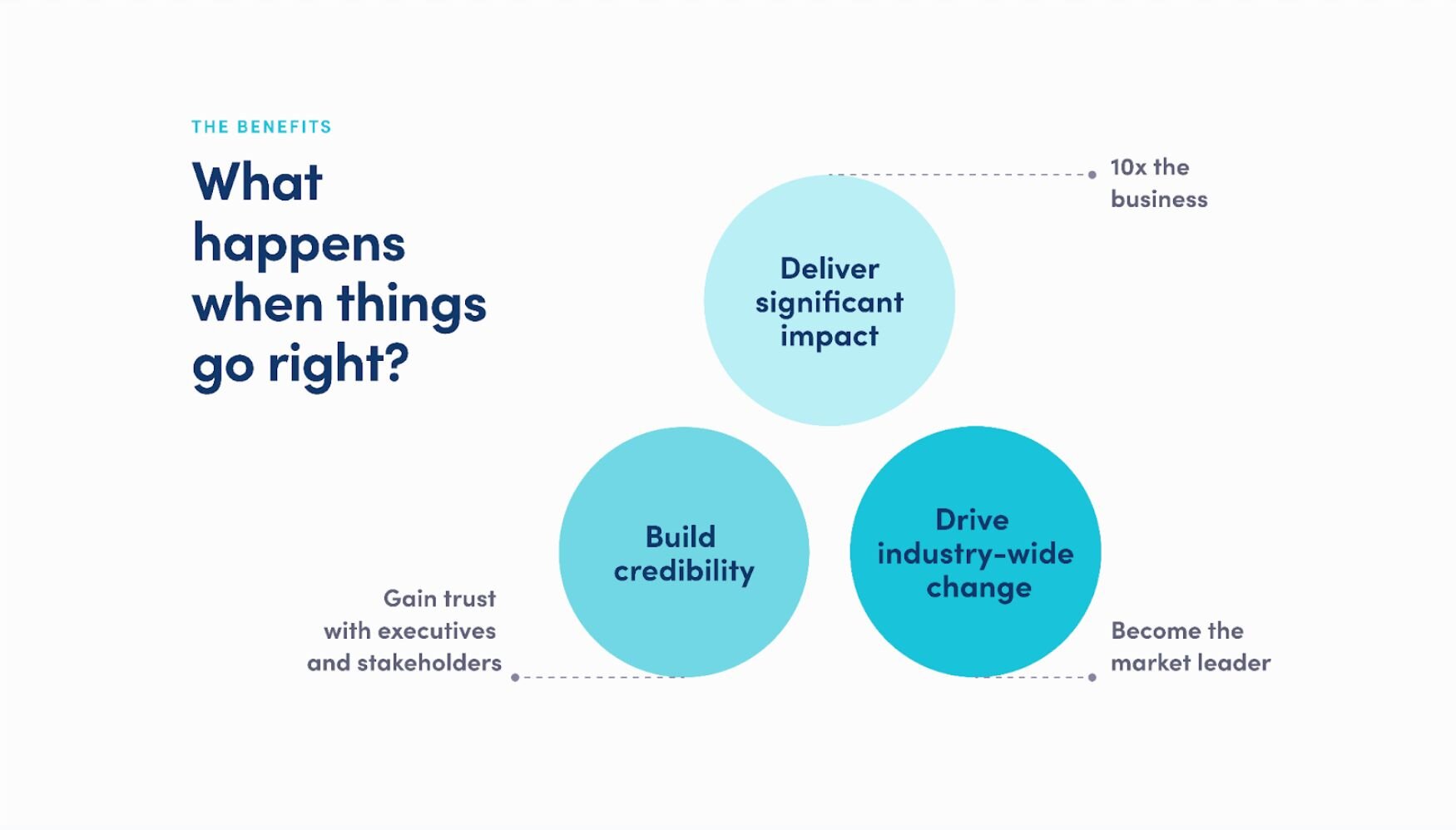
To bring this concept to life, Michelle shared her experience leading Netflix Kids, where anchoring the strategy on connecting children with their favourite characters unlocked exponential growth. The lesson from this was that big bets only succeed when they’re grounded in clear hypotheses and layered with smaller experiments.
At the Talk Shop stage, Nichole Mace, SVP Product at Pendo, explored how AI can radically change the journey from onboarding to value.
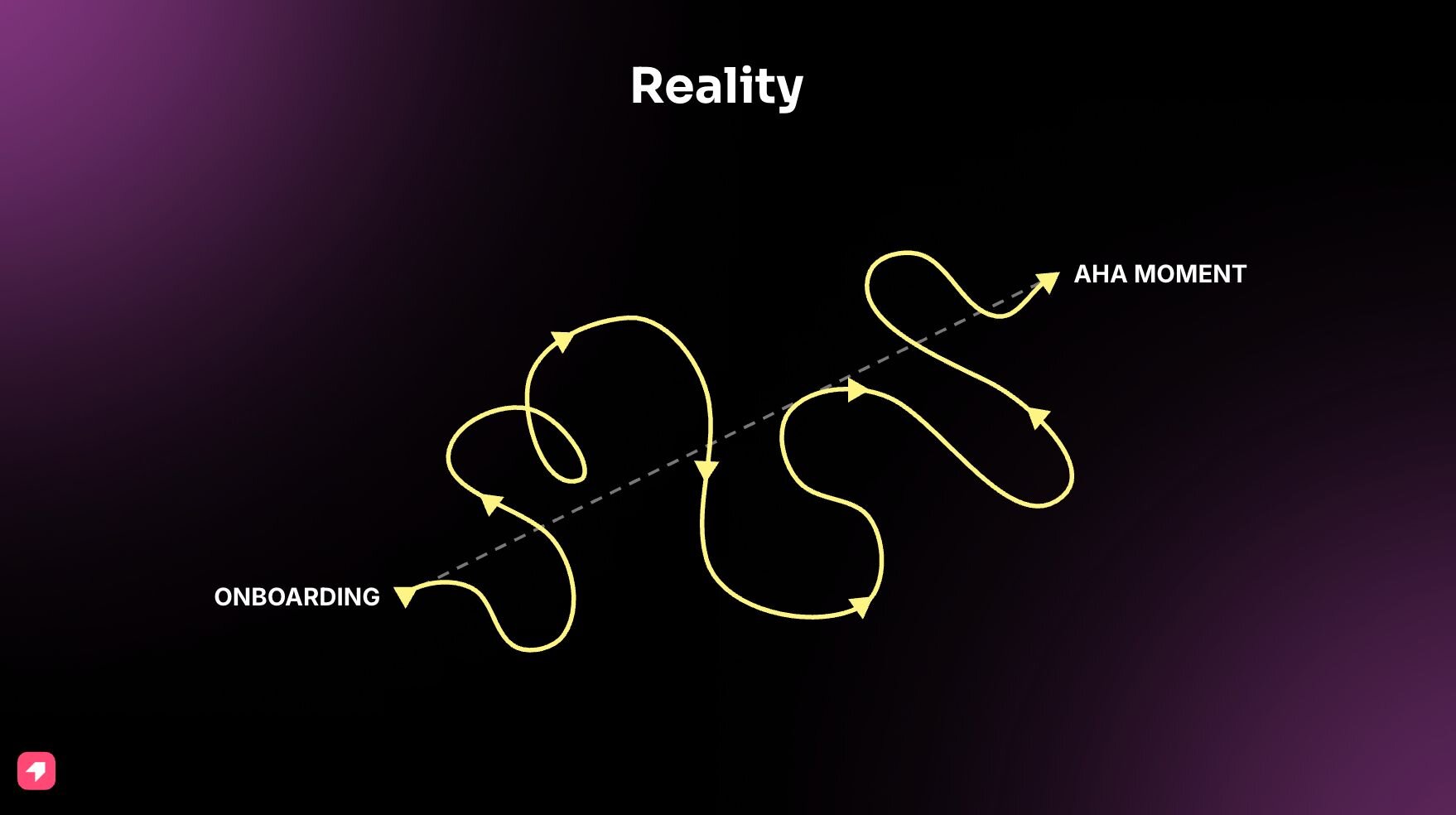
“AI can shorten and straighten the line between onboarding and the Aha moment,” she explained, when a user first feels the product’s core value.
Nichole shared a framework for reducing time-to-value with AI:
- Understand users by pulling together data from multiple sources.
- Personalise experiences in real time, even down to 1:1 journeys.
- Guide users with chatbots and agents that adapt when frustration surfaces.
- Eliminate unnecessary steps by automating with the data you already have.
Data, data, and more data
Kicking off the evening talks was Ray Wang, Founder and Principal Analyst at Constellation Research, who looked ahead to what product management will mean in the decade to come.
Ray explained that companies that build AI-first business models will outperform the market 10 to 1. Just as Coca-Cola won by weaving refrigeration into its business model, the winners of tomorrow will be those who embed AI at the core.
He urged product leaders to focus on decision velocity: building the data feedback loops, automation, and business graphs that allow organisations to act faster and more precisely than their competitors. And importantly, he flipped the automation question on its head:
“When looking at processes, the question shouldn’t be when you automate, it should be when you insert a human into the process.”
A philosophical conversation about tech today
To close out Day 1, we shifted gears. We slowed things down, as Senior Director of Mind the Product, Mike Belsito, sat down with Rainn Wilson, actor, podcaster, and co-founder of SoulPancake, who invited us into a more human, reflective discussion on technology, meaning, and connection.
Drawing on his career as an actor and entrepreneur, Rainn spoke about the importance of storytelling, authenticity, and values in building anything that resonates. He warned that tools like social media and AI risk eroding empathy if we don’t slow down and think carefully about their impact, particularly on younger generations.
That was a ton of product goodness in one day. Be sure to look out for more in-depth write-ups of all of these talks in the coming weeks. We’ll see you for our day 2 recap tomorrow!

Keep reading
Mastering the art of communication as a PM: Sahil Jain at INDUSTRY 2025
Disrupt or be disrupted — how to navigate product stagnation: Stephanie Musat at INDUSTRY 2025
Excel at managing product managers: Mariah Craddick at INDUSTRY 2025
How to use Jobs-to-be-done to recruit and retain great product teams by Bobby Moesta at INDUSTRY 2025