

Day two of INDUSTRY 2025 picked up right where day one left off, offering energy, inspiration, and practical advice from some of the best in product. Attendees could dive into their “choose your own adventure” experience, from speed networking and Q&A with speakers to breakout sessions led by practising product managers.
Here are our key takeaways from day two.
(Over the coming weeks and months, we’ll be releasing deep write-ups and videos of all of these talks, so be sure to look out for them.)
Congratulations! You’re a Game Designer
When people usually talk about playing the game at work, they think about internal politics, John Cutler, Head of Product at Dotwork, explained in his opening keynote. In reality, the “game” is the system people learn to navigate to survive, succeed, and thrive, which includes politics.
“A bad system will beat a good person every time,” said John, quoting W. Edwards Deming. “What I love about behaviour and game design lenses is that they don’t treat this as binary. It’s not the system versus the person. It’s both.”

People shape the environment, and environments shape people. People bring skills, and environments amplify skills. Organisational design embraces that tension.
If you want to change, start with behaviour. People pour their energy, creativity, joy, and curiosity into games, hobby communities, immersive spaces, and intentional rituals outside of work. These environments are designed with care and intention. Leaders must embrace their role as intentional designers by consciously shaping how work is experienced.
Execution won’t stop. Strategy will - unless you have a system.
In the second keynote talk of the day, Product Operations consultant Jenny Wanger tackled one of product management's most persistent challenges: finding time for strategy while drowning in execution. Her research portrayed a stark reality for many product people today: 90% of individual contributors and 85% of managers feel they never get enough time for strategic thinking. Even 62% of VPs and CPOs struggle with this balance.
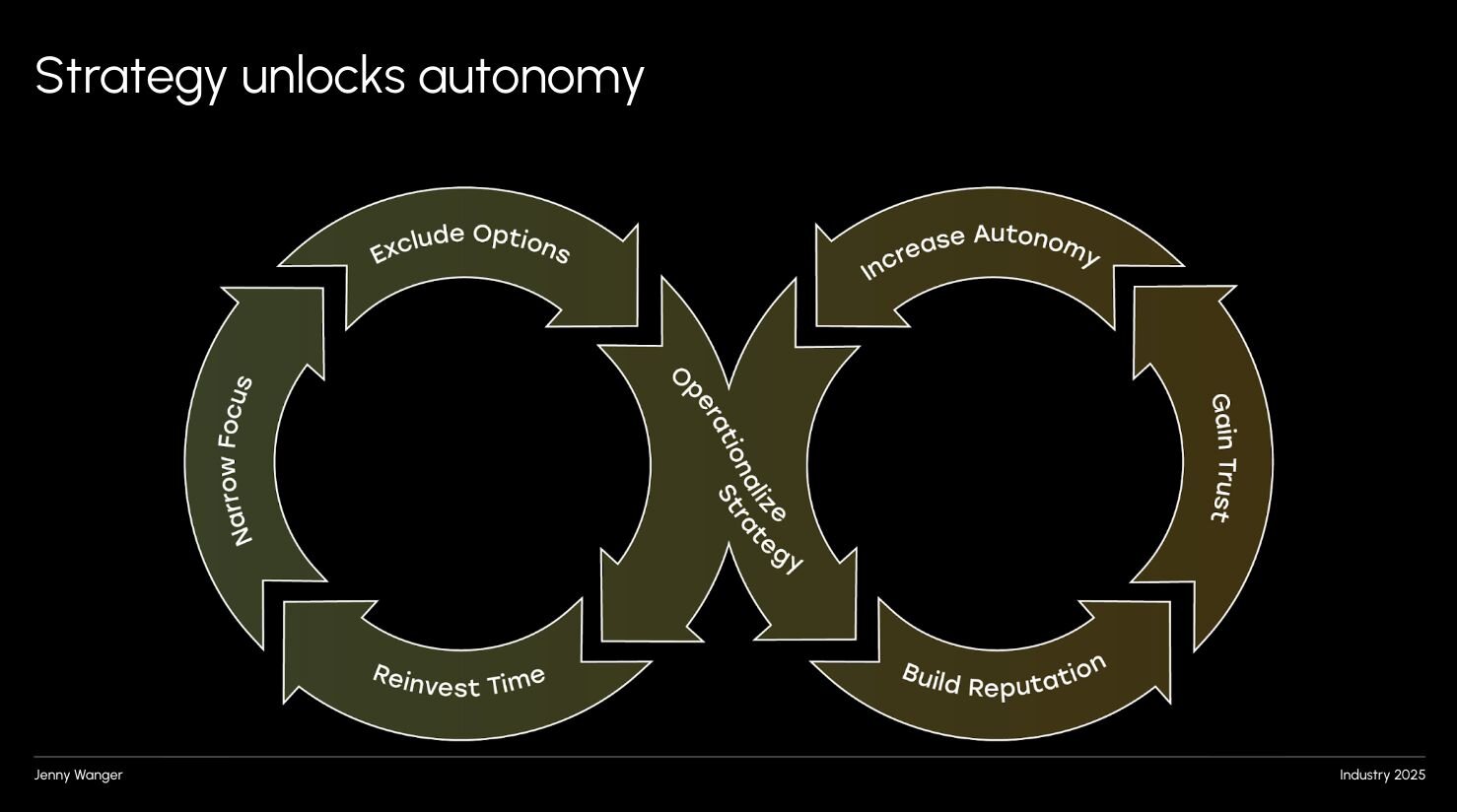
The solution? A systematic approach through what Jenny calls the "Strategy Flywheel."
Jenny explained how to operationalise your strategy by thinking in these three buckets.
- Make your strategy easy to find
- Make your strategy easy to understand
- Make it easy for people to justify your strategy.
She noted that you should not use all these techniques simultaneously; pick the most helpful technique at each flywheel turn.
Design for the people that won’t read
Jenny explained that you should resist the urge to write big documents because few people will read them. Instead, make your strategy visible and put it where they’re already looking.
She also stressed how it’s the job of a product to make sure others understand you:
- Money speaks to leadership; strategy needs to flow in every direction.
- To test if your strategy is understandable, ask all your stakeholders to explain your strategy.
- You can use User research to close the communication gap.
“If you continue to communicate your strategy, you’ll create a strategy-oriented product culture,” she said. You know you’ve operationalised strategy enough when your teammates complain about how often you talk about it.”
Her closing thoughts were clear:
- Start your system.
- Make it visible.
- Build trust.
- Claim your autonomy.
“Narrow your focus, use it to say no, operationalise it so everyone sees it, reinvest the time, and repeat,” she explained.
Ending the session, she challenged the audience to pick one strategic focus. “Next time someone comes to you with something not on that focus, say no. Then start communicating it out,” she closed.
Building products that matter fast
On the talk shop stage, Matthew Certner, Product Engineering Leader at IBM Americas, delivered insights about AI adoption in products today. Despite the transformative potential, only one in five product teams has adopted generative AI at any product engineering stage. The results are mixed for those who have adopted it, with only 27% feeling that AI delivered its promised functional benefits and only 23% seeing the expected financial returns.
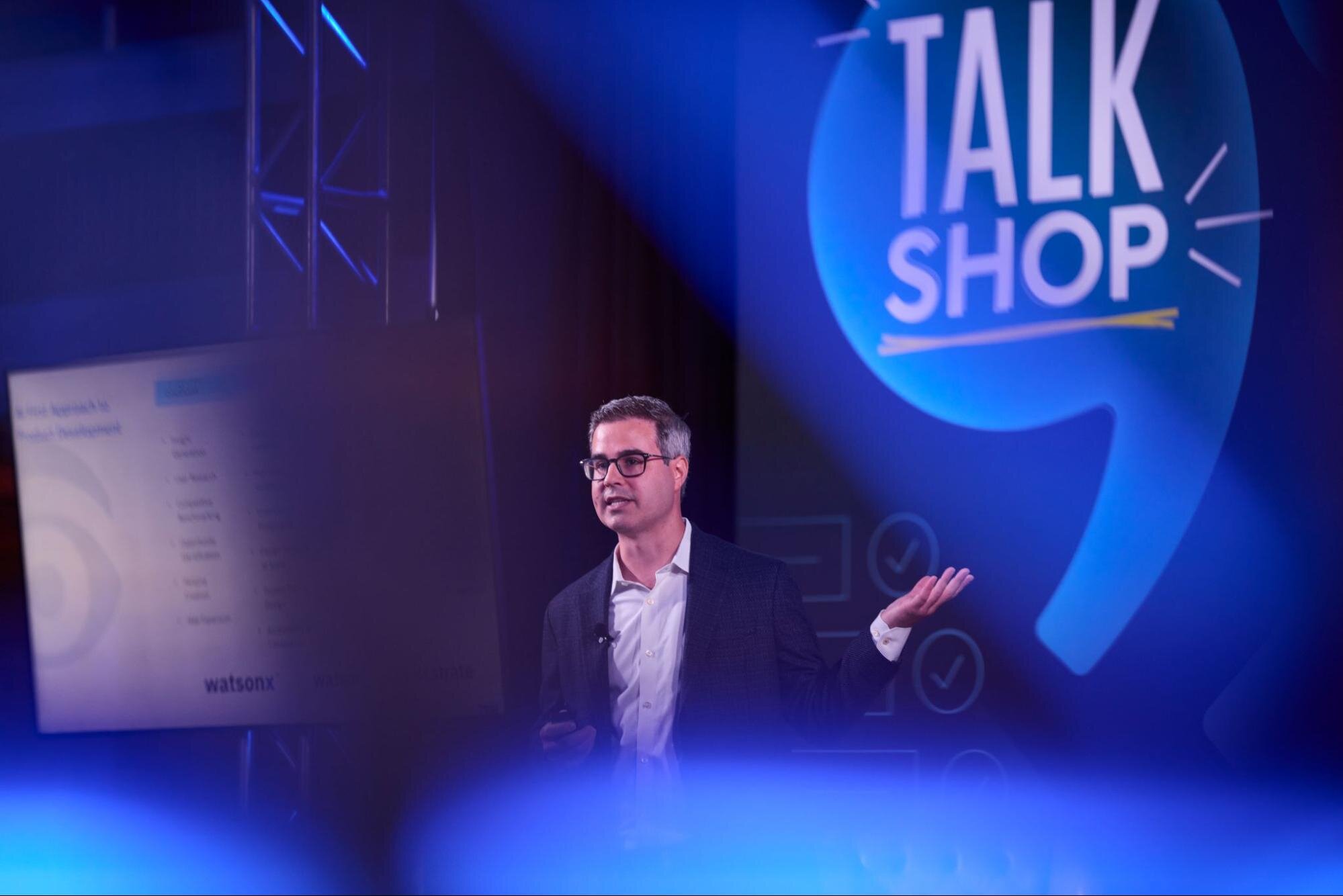
Matthew explained how technology has removed barriers to experimentation, and analysts estimate 600 to 800 million new products will be built by the end of 2026.
He shared four habits of high-performing teams for increasing the benefits of AI.
- Flexible: Adjust standards and working methods based on feedback and experiential learning.
- Incremental and Targeted: You can’t build everything at once. Take small steps to deliver value iteratively.
- Data Led: Use advanced analytics to gather insights from user data and convert them into actions.
- Cross-functional product: Eliminate the need for handoffs within the team or to external teams. Try to apply all four habits because the returns will show.
The new reality is that GenAI and Agentic AI have removed all of the barriers to experimentation. So if you’re not thinking about how you will use AI, someone else is.
Good Managers vs Bad Managers
Managers can make or break your career, yet no one teaches you how to be a good manager. And that’s a problem, Mariah Craddick, Executive Director of Product at The Atlantic, opened with in her session on the Talk Shop stage.
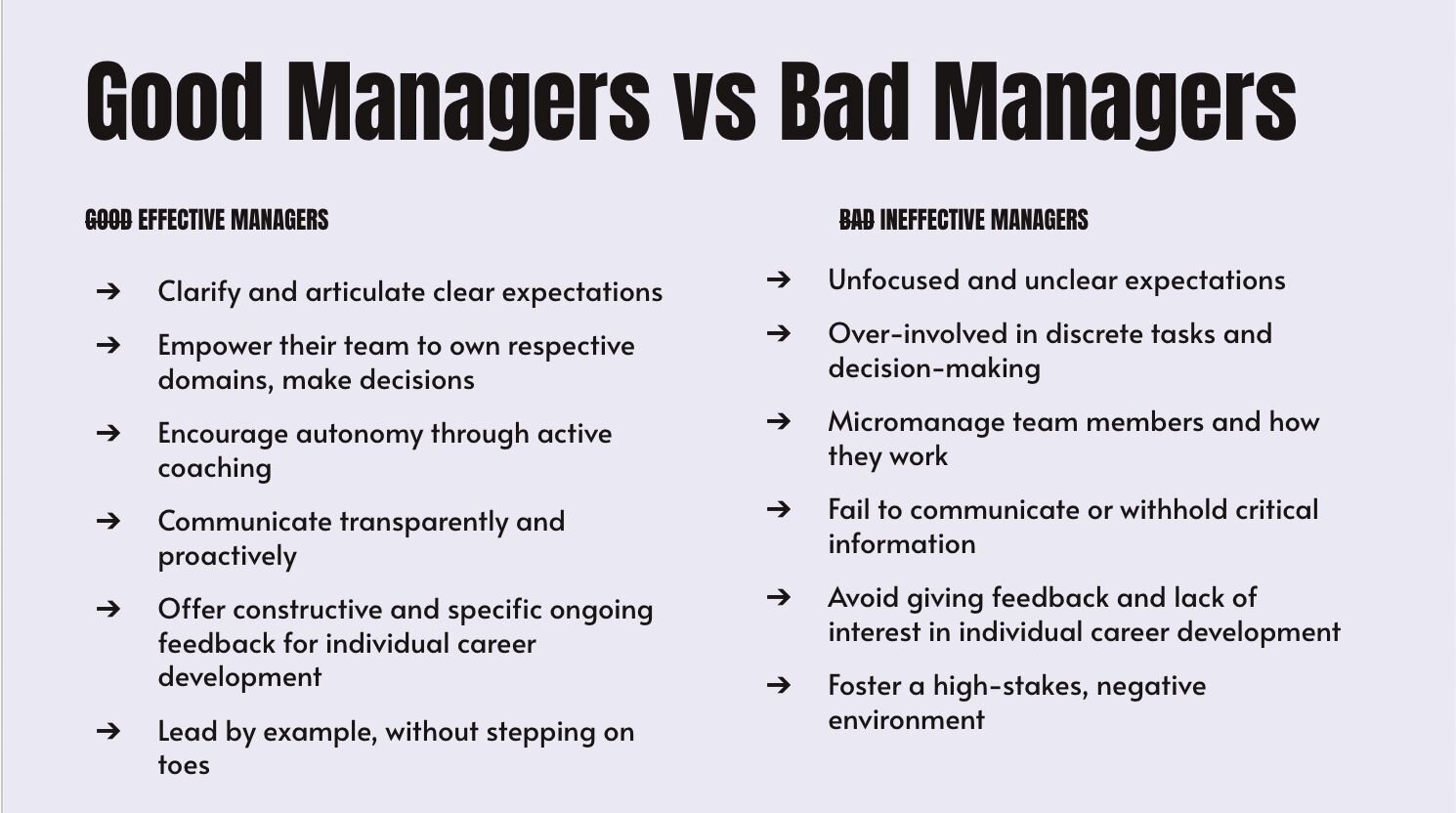
Effective managers clarify expectations, empower their teams to own their domains, encourage autonomy through coaching, communicate transparently, and offer constructive feedback.
“In contrast,” Mariah continued, “Ineffective managers create unfocused environments, micromanage, fail to communicate critical information, avoid giving feedback, and foster high-stakes negative environments.”
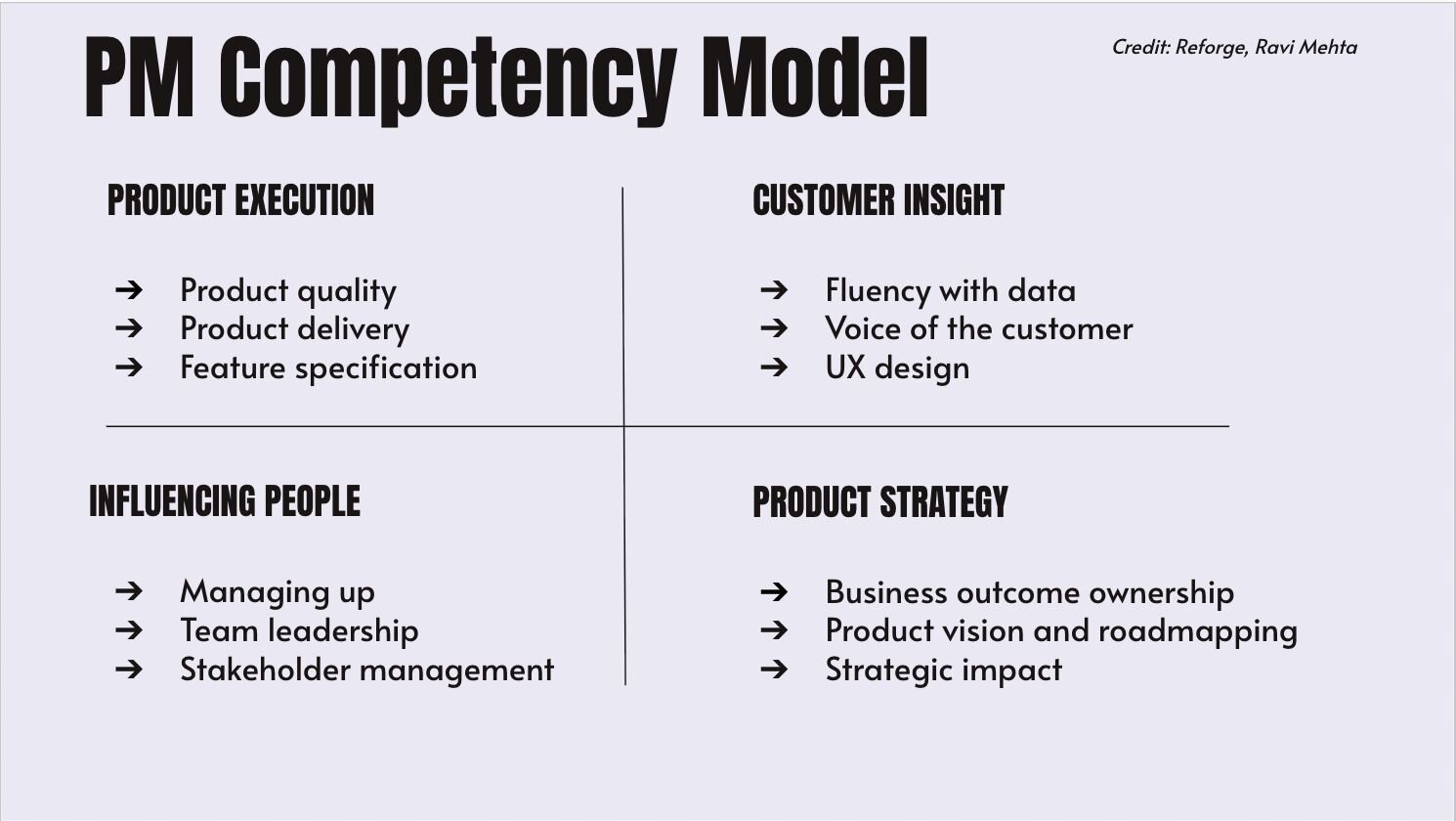
Building talented teams requires planning and ongoing engagement. It doesn't just happen overnight. She shared Ravi Mehta's PM Competency Model, an approach to evaluating and coaching product people. It defines the twelve competencies needed for great product work. You can adjust how you use and apply the Competency Model to your company and specific team members.
Cannibalise your product
Great products replace themselves, Stephanie Musat, Director of Product, Content, from Warner Bros., stressed in her session at INDUSTRY 2025. She challenged conventional wisdom about product cannibalisation. Rather than seeing it as "stealing from ourselves," successful companies recognise that cannibalisation is about evolving toward higher value. If you don't eat your own lunch, someone else will, she explained.
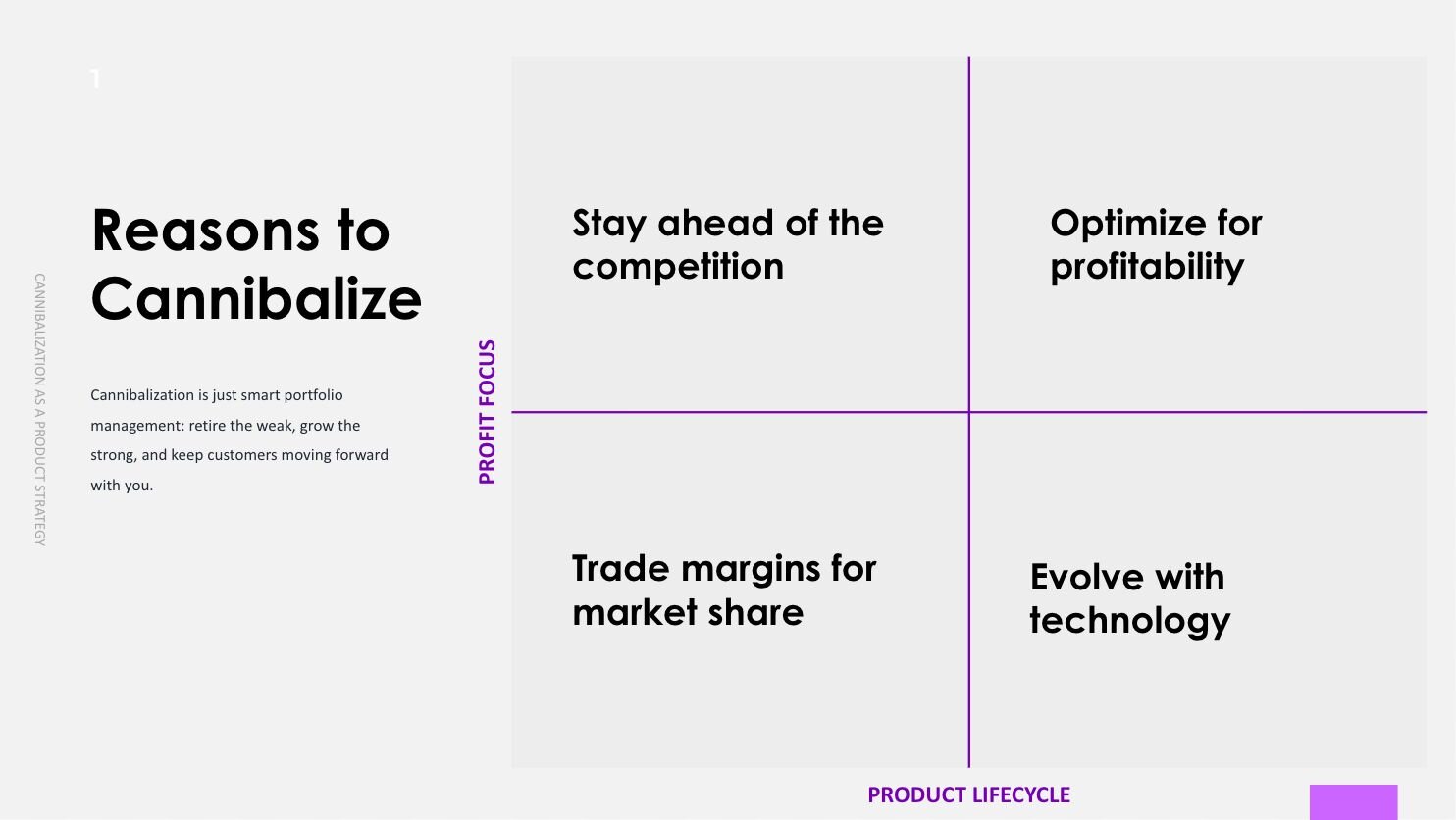
“It’s essential to free ourselves from the burden of maintaining something that is not contributing to our success, which is the clearest sign of a healthy product,” Stephanie explained.
Examples of product cannibalisation
Stephanie listed a few examples where companies have effective ways of depreciating products, from small features to large-scale offerings. Some examples:
- Apple and the iPod
- Windows 7
- Warner Bros Discovery is going back to HBOMax.
So what do you do after you decide to cannibalise? She broke it down for us:
Design a clear migration path
If you leave customers to figure it out themselves, you risk churn. If you guide them, you build loyalty.
Align internal teams and incentives
- Sales: Reward the sales team for moving customers to the newer option
- Finance: Adapt reporting strategy from short-term view to longer-term forecast
- Customer support: Prep teams will offer more hands-on support through transition.
Communicate with transparency
- Frame as progress, not abandonment: Keep it real, include supporting artefacts.
- Circulate learnings: Tell everyone, spread your gospel, and prevent others’ mistakes.
- Use OKRs as a guiding light: Explain how this feature didn’t match OKRs and outline what you’re doing to support them.
The issue with poor communication
Sahil Jain, Co-Founder and CEO of Samepage.ai, stressed that there’s a huge problem hiding in plain sight: we suck at communication. “Communication and quality are the single biggest multiplier of your work,” he opened with.
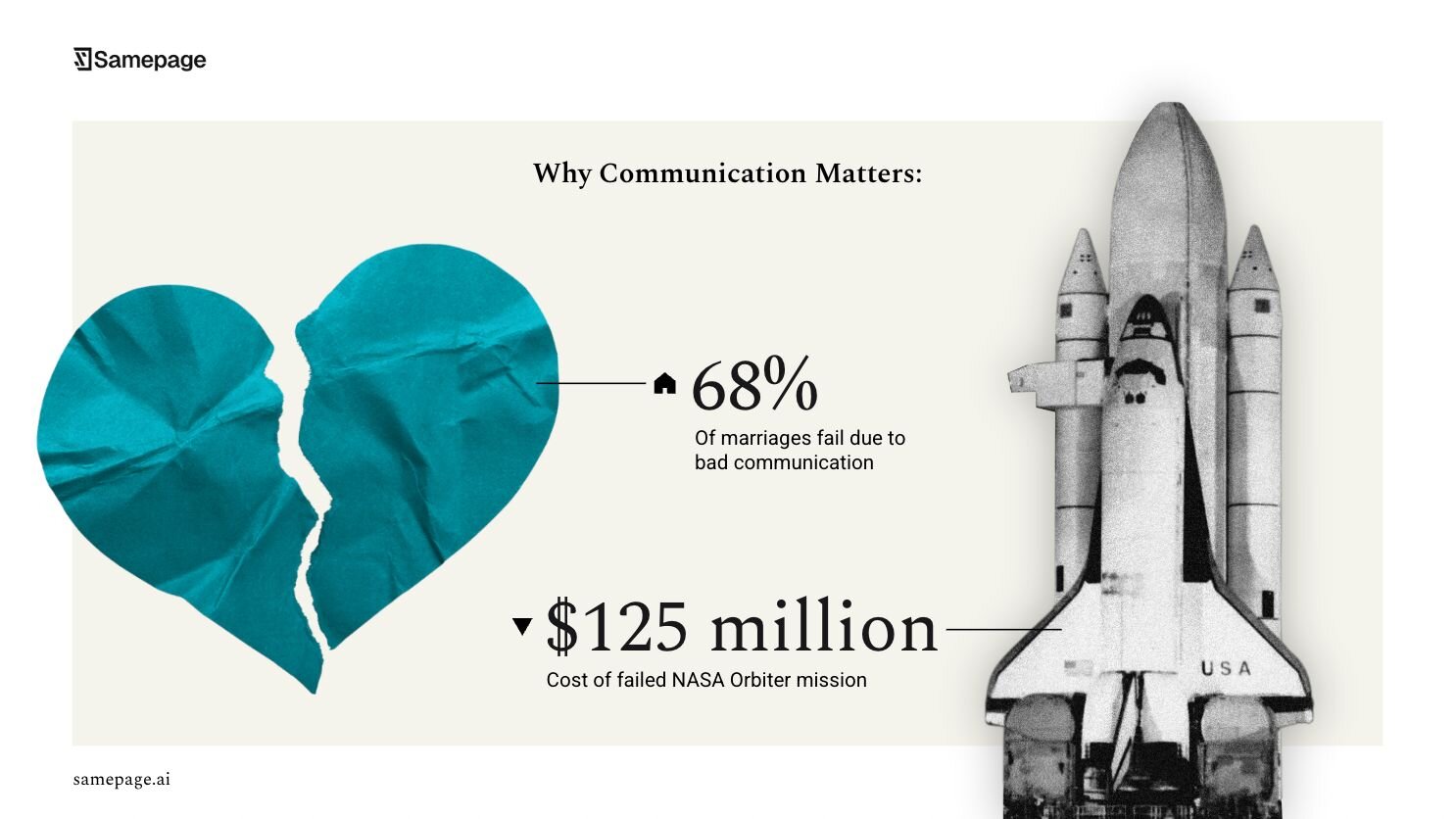
Poor communication = chaos everywhere and results in loss, monetary and otherwise.
He shared four techniques that have emerged for better communication.
- Lower expectations and aim for 70% alignment rather than perfection.
- When crafting messages, lead empathetically by accounting for different roles, contexts, and goals.
- Repeat with intention, we overestimate how well people understand our inner thoughts and need to reinforce messages frequently.
- Finally, frame with a story because facts alone aren't memorable, but stories are 22 times more likely to stick.
Building AI trust
For the final Talk Shop session of the day, Nina Olding from Weights and Biases addressed the growing trust gap around AI. She explained that since 2019, trust among Americans has dropped from 50% to just 33%, citing a recent study.
Nina offered a framework centred on three key questions: Can users see when and where AI is being used? Can users control the AI? Can users understand why AI did what it did?
Applying the framework
This framework is especially important when moving from deterministic to non-deterministic products.
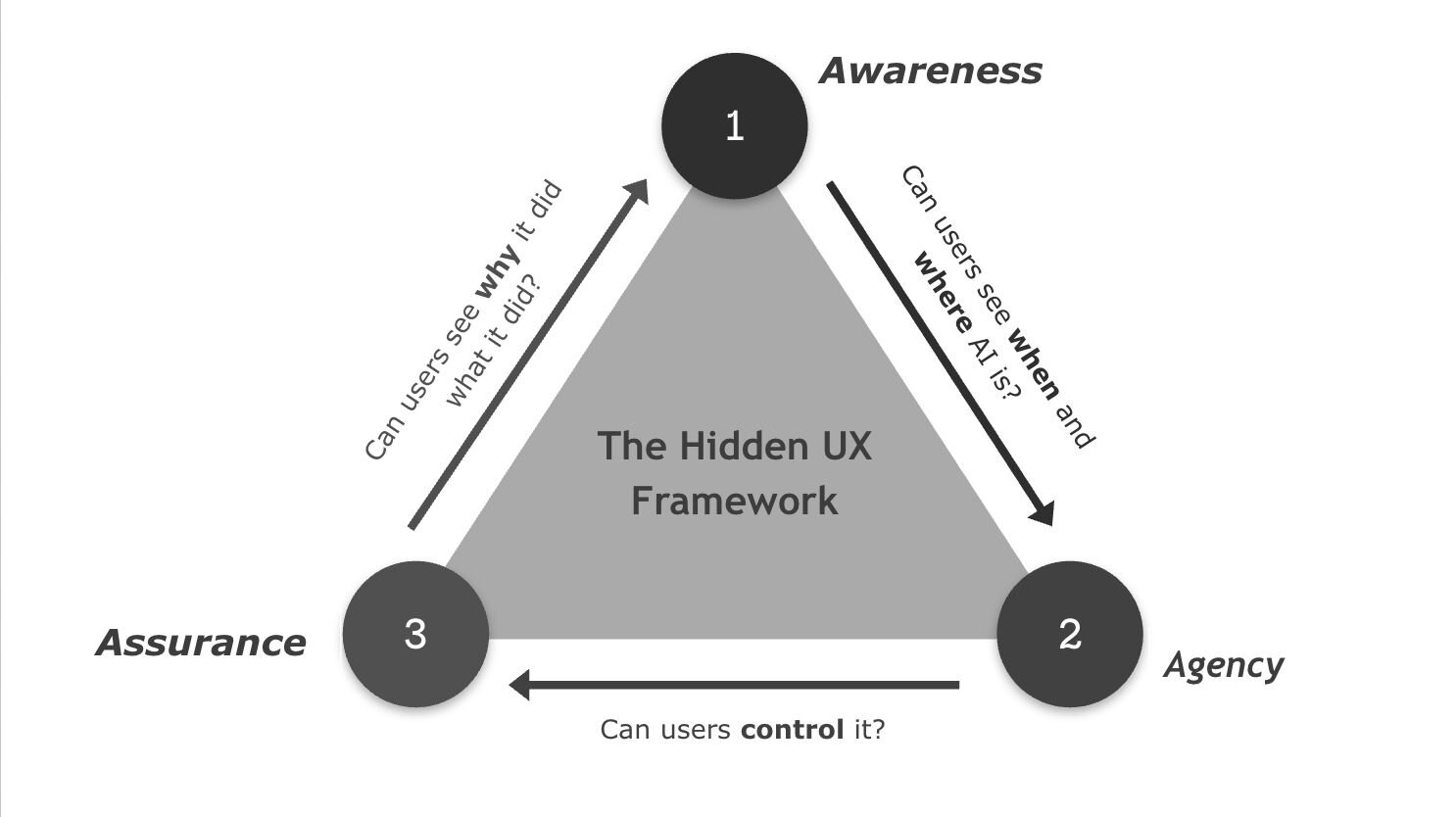
Awareness
Can users see when and where AI is? This enables users to understand what’s happening with their product. It’s helpful to let your users know when you actually used AI.
- Make AI presence visible with badges, watermarks, or LED lights.
- Be clear about data use: What data are you collecting, when, and why you need it.
Agency
Can users control AI? Control delivers comfort. It allows users to establish their own boundaries.
- Simple defaults, deep optionality - Meet your users where they are. Treat your users like grown-ups and give them agency.
- Easily accessible escape hatches—Give your users an escape. Let them easily exist, override, or correct AI suggestions.
Assurance
Can users see why AI did what it did?
Clarity leads to confidence.e
- Show your work - explain your reasoning in plain language. Deep Research does a good job of this.
- Give confidence context - Help your users calibrate. Explain how confident you are about your answer. Showing your users that you’re uncertain is better than providing a wrong answer.
Rethink recruiting and retaining in product.
For the final keynote for INDUSTRY 2025, the one and only Bobby Moesta introduced a radical reframe: What if hiring and retention weren't HR problems but product problems? Using the Jobs-to-be-Done theory, he revealed that companies hire employees more than employees hire companies. People choose where they want to work based on the progress they're trying to make in their lives.
Research with over 1,000 job switchers revealed that people fall into four main career quests:
- Getting out of toxic situations,
- Regaining control over time allocation,
- Regaining alignment with values and recognition,
- Taking the next step in their career journey.
Understanding these quests allows companies to target passive candidates, create compelling career narratives, and conduct interviews focused on what motivates people.
For retention, Bobby explains that the goal is to support individual progress journeys rather than trying to keep people in static roles. The goal is to ensure they're making progress while they're with you. He broke it down in a few steps for us:
Foster Progress-Oriented Conversations
Establish regular dialogue about career aspirations, energy drivers, and desired experiences. These conversations should explore:
- What aspects of their work provide energy versus drain
- How their quest might be evolving
- What trade-offs are they willing to make
- How the organisation can better support their progress
Implement Ongoing Quest Assessment
Use tools like Vocation to understand what drives each team member regularly. This should be integrated into:
- Pre-hire - What quest are you on?
- Onboarding - What gives you energy?
- Quarterly check-in - Is your quest evolving?
- Performance Review - What progress do you want to make?
- Role Transition - Let’s find your fit.
Support Individual Progress Journeys.
Recognise that each person’s quest for progress is unique and evolving. Effective retention strategies include:
- Providing learning opportunities aligned with individual quests
- Creating clear pathways for different types of advancement
- Offering project variety and stretch assignments
- Enabling autonomy and decision-making authority where appropriate
Design Flexible Role Architecture
Don’t force people into rigid job requirements. Design roles that utilise the specific strengths and quests of valuable team members. This involves:
- Breaking down tasks within job families
- Creating roles that play to individual strengths
- Reverse engineering positions based on high performers’ capabilities
- Allowing role evolution as quests change over time
And just like that, INDUSTRY 2025 was over for another year. Thank you so much to attendees, volunteers, speakers, and the team behind the event for making it possible! This was just a snapshot of the product goodness that commenced over the past few days. Be sure to be on the lookout for extensive deep dives into each keynote and talk shop session over the coming weeks and months. See you next year!

Keep reading
Mastering the art of communication as a PM: Sahil Jain at INDUSTRY 2025
Disrupt or be disrupted — how to navigate product stagnation: Stephanie Musat at INDUSTRY 2025
Excel at managing product managers: Mariah Craddick at INDUSTRY 2025
How to use Jobs-to-be-done to recruit and retain great product teams by Bobby Moesta at INDUSTRY 2025