
Brent Tworetzky, Senior Vice President of Product at Peloton, has built a reputation for bringing together deep user insight with data-driven experimentation. At INDUSTRY 2025, he delivered a standout session on what product leaders can do to drive maximum impact.
Watch the video in full, or read on for some of his key takeaways!
After two decades in product, Brent often asks himself: “How could I have made more impact?”. His session reflected on lessons from his experience at multiple leading companies such as Udacity and Peloton. He emphasised that despite constant change,, some core principles of product leadership continue to guide teams in delivering the maximum impact.
Brent says, “In a world of so much change, what are the lessons that endure? Our industry is distracted by AI, LOMs, and transformation, yet the fundamentals of driving impact remain the same.”
Lesson 1: Understanding the business engine
One of Brent’s earliest and most important lessons came during his time at Udacity, a digital course platform. The team launched high-quality online courses, attracting hundreds of thousands of sign-ups. Yet, only a small proportion of users paid for credentials or additional support. The disconnect revealed that user excitement alone does not equal a successful business.
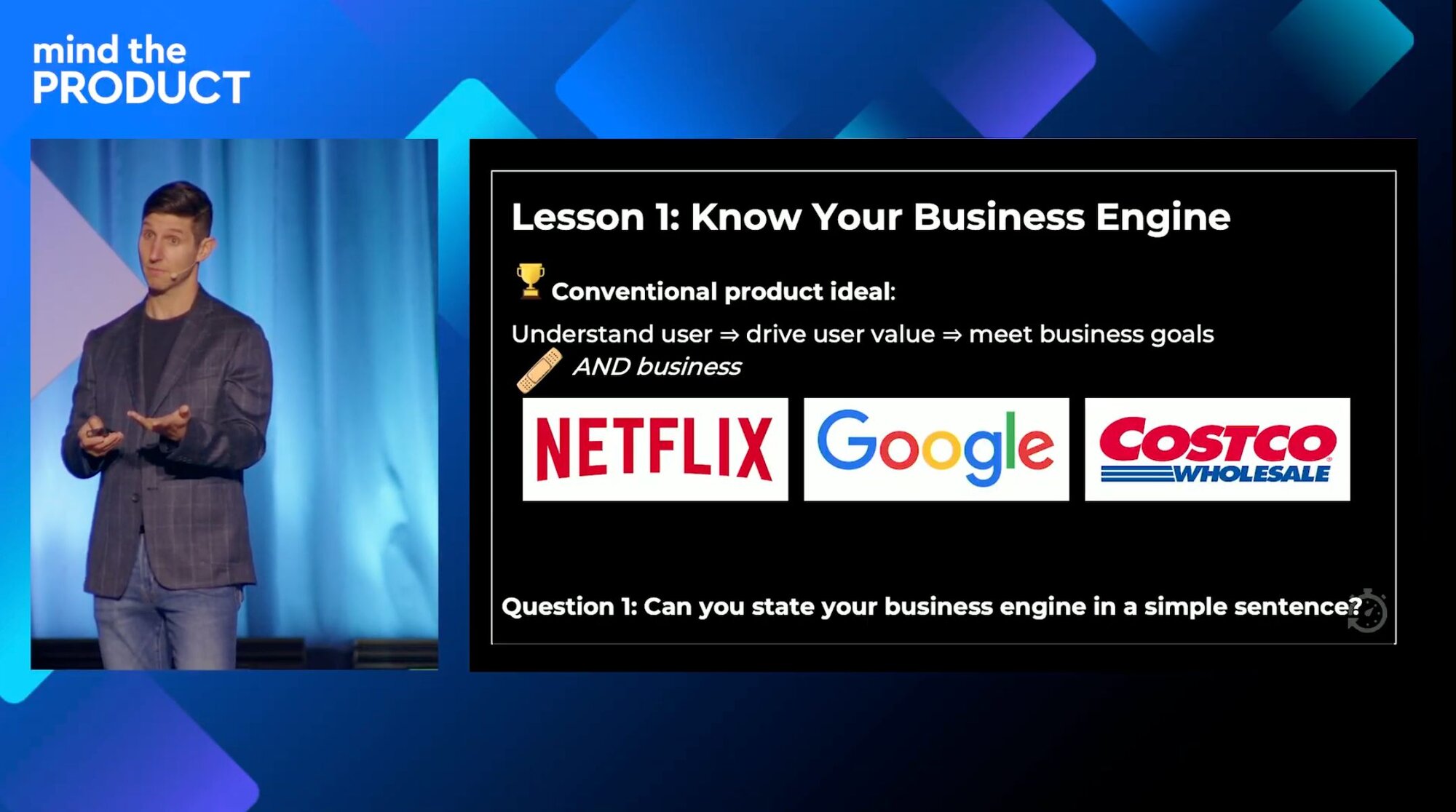
“Once you actually figure out which users are willing to pay, that’s where the real impact happens. My mistake was spending so much time on user empathy without connecting it to the business engine.”
He stressed that if your engineers, designers, marketing teams cannot understand the business then you will be “building wrong and wasting your time”.
Once he realised what Udacity users really wanted, he decided to pivot to career-focused credentials such as his creation of the Nano degree, recognised by companies such as Google and AT&T. This approach doubled key metrics almost overnight because what serious users actually wanted was to get ahead in their careers.
PMs have to recognise that there are four main topics they need to focus on for the business engine to be successful and that is prioritisation, business model, organisation structure and processes.
Brent stressed that everyone on a product squad must understand both user value and the business engine but being able to clearly define what your business engine is in a single sentence, is key to creating successful products.
“The more likely you, within your squad, understand the business engine and are solving the right business problems, the more autonomy you’ll get and the more success you’ll have.”
Getting your business engine right:
- Describe your business engine in a single sentence that everyone understands.
- Align product offerings with users who will grow meaningful, measurable value.
- Avoid spending time on segments that won’t drive business outcomes.
Lesson 2: Refocusing organisational design
Brent highlighted that organisational structure is often overlooked but can significantly influence impact and is key to building stable and empowered teams.
During his time at the XO Group, Brent recognised that four product areas within the company, had unequal business value. By analysing which areas drove the most strategic outcomes, he reorganised the teams to focus resources effectively.
“What I actually needed to do was see what the business really needed and disrupt the org structure to match that.”
This approach allowed expert squads to operate autonomously doing what they are best at, whilst remaining in sync with strategic priorities. The company’s market cap then grew from £300m to over £1bn as a result of these changes. Brent noted that rigid “ideal” structures can slow teams down, while squads that align with high-impact areas can actually accelerate the creation of products that bring value.
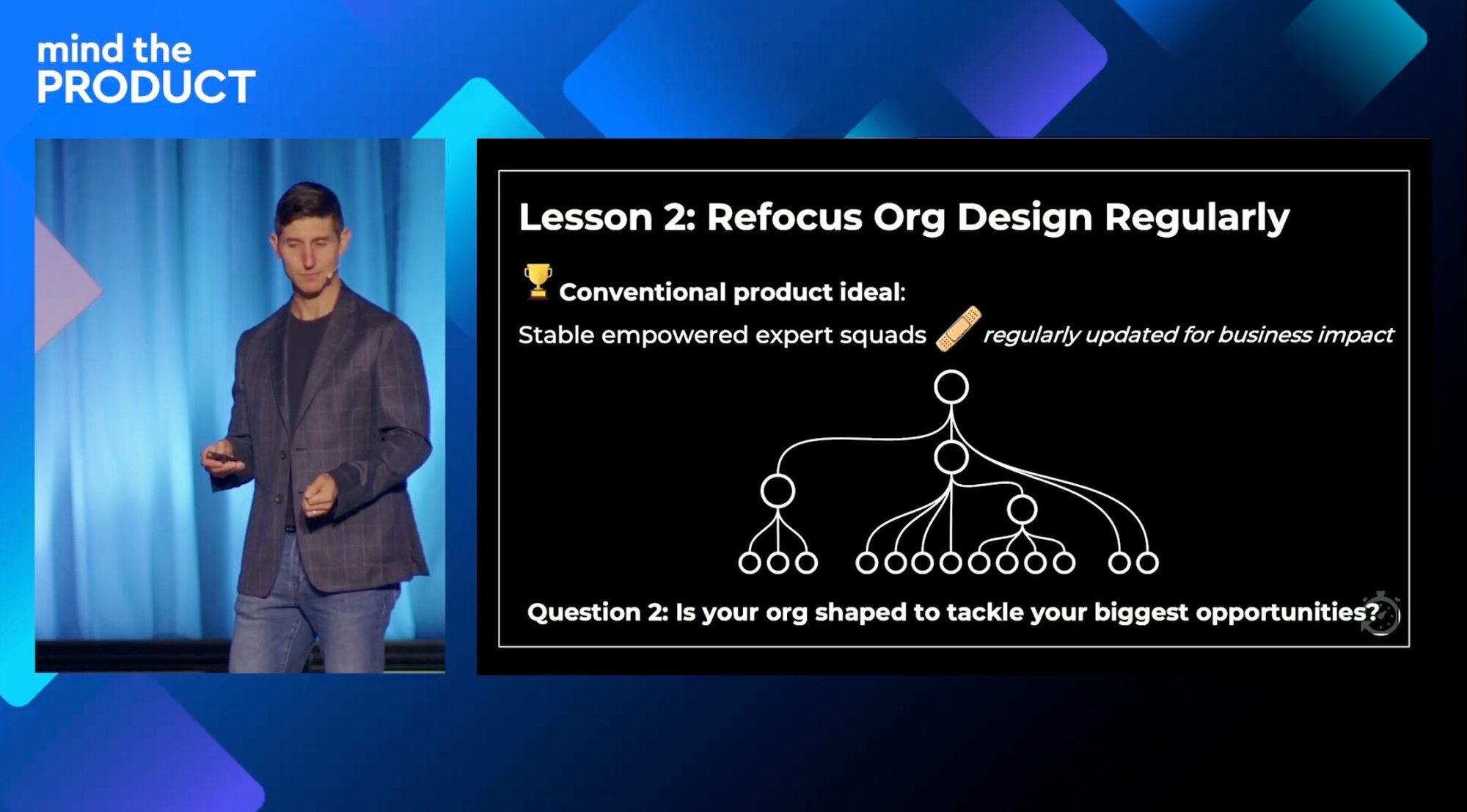
He outlined practical steps:
- Regularly assess whether your organisational design supports your most critical business goals.
- Empower small teams to take ownership of outcomes.
- Be willing to adapt structures to reflect changes in business priorities.
Lesson 3: Investing in winners
Investment in the right places can be key as Brent explained. He recounted his experience at Chegg in 2010, where the company’s textbook rental business was already a high-growth “rocket ship,” reaching $200 million in revenue within four years. Eager to innovate, the team expanded into a social network, digital textbooks, and additional products alongside the core rental service.
Reflecting on this period, Brent said, “If we had focused on making the textbook rental business even stronger, optimising the economics, understanding exactly which books to offer and at what price, we could have grown that business from $200 million to $500 million in just two to three years.”
Instead he argued that spreading resources across new initiatives diverted attention from the core business, slowing its potential growth.
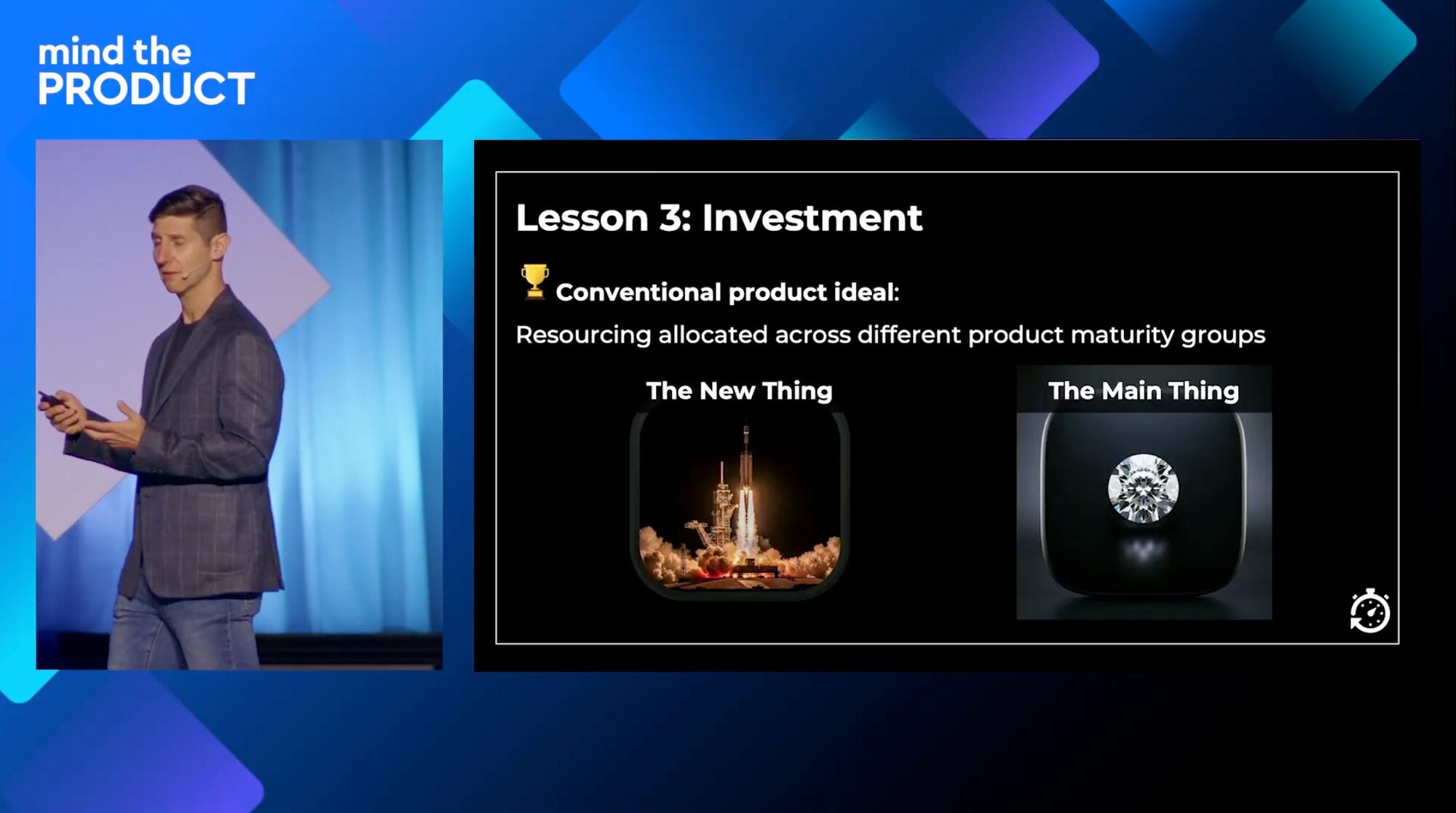
Investing in core offerings ensures resources and attention go to initiatives with the highest potential return. Brent also referenced examples from other successful companies: LinkedIn, Instagram, Google Maps, and Uber Eats, all of which thrive because they relentlessly focus on their main product’s “magical value”.
Brent suggested the following:
- Identify your “big winners” and prioritise them for maximum impact.
- Avoid chasing side initiatives that divert attention from core offerings.
- Continuously optimise and iterate on products that already deliver strong value.
Lesson 4: Breaking process rules intentionally
The third key lesson that Brent went on to address was the need for breaking down processes, which is vital for consistency and scale. Brent explained that if the process is too rigid it can actually slow innovation. An example of this is when Brent joined Peloton he wanted to innovate inside the app but the company initially were fixed on focusing on only one app.
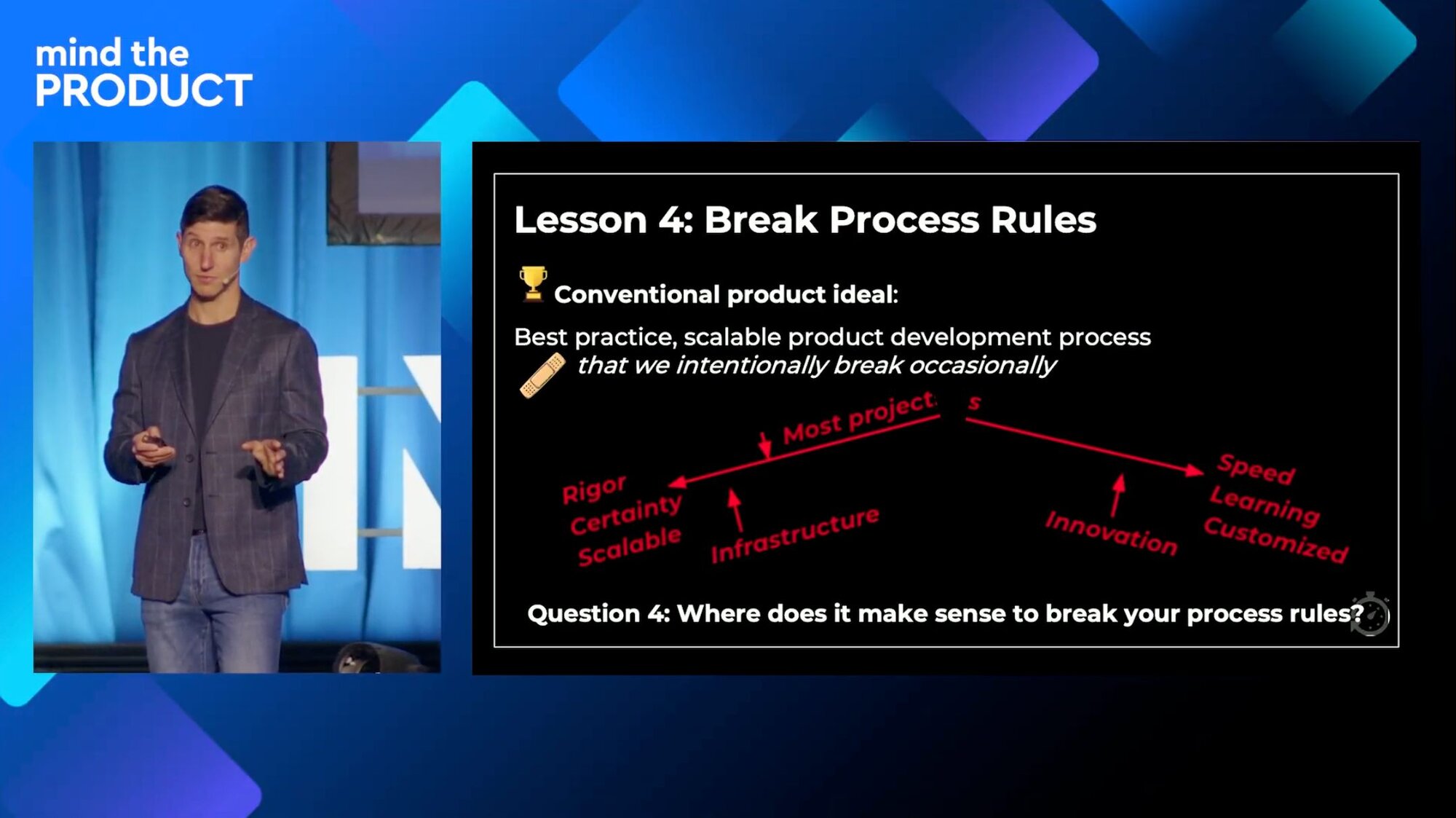
Brent recognised the need to move faster and championed a new app, Strength plus, for quicker iteration and better user outcomes and that is exactly what it achieved.
“Just like all the other lessons it's painful to break a rule so it has to be valuable and then you have to convince the people who disagree with you."
He identified that there are many ways to break your process rules such as:
- New code bases
- New apps
- New software
- New websites
He encouraged PMs to critically evaluate processes, recognising that some rules are there to solve chaos, while others may inadvertently hinder impact. Breaking processes should always be purposeful, transparent, and aimed at accelerating results by doing the following:
- Question whether current processes are helping or slowing your team.
- Only break rules when it will meaningfully accelerate outcomes.
- Communicate clearly with stakeholders about the reasons and benefits
Brent emphasised that these lessons are interdependent: understanding the business engine informs organisational design, which in turn guides where to invest and when processes can be broken. PMs who integrate these principles can create autonomous, high-performing squads that are successful in their product offerings.
“Each one of these lessons cost me a year of focus, customer impact, and business outcomes. I get it right a lot of the time; I don’t always get it right. Revisiting these lessons is how I keep improving.”
Brent’s lessons revolve around four key questions:
- Can you state your business engine in a simple sentence?
- Is your organisation shaped to tackle your biggest opportunities?
- Have you optimised your big winner?
- Where does it make sense to break your process rules?
Key takeaways:
- Know your business engine: Ensure all team members understand the value you deliver and who will pay for it.
- Refocus organisational design: Make sure squads tackle the highest-impact opportunities, empowering them to act autonomously.
- Invest in winners: Prioritise your strongest products and features rather than spreading resources thin.
- Break process rules intentionally: Adapt processes only when it accelerates outcomes and has clear communication throughout.
- Integrate lessons across the team: Understand how each principle affects others to maximise strategic impact.
Brent closed by encouraging leaders to apply these lessons today. He emphasised that by implementing these lessons, PMs had a better chance of ensuring that their teams deliver meaningful value for users and drive measurable business impact, even in a world of constant change.

Keep reading