
Not only does product market fit get talked about like it's a finish line, it's one of the most overused phrases in business. A company launches something, customers start buying, and people declare victory. Way too simple.
Over the past decade, I've led countless digital transformation, commerce, and operational overhauls across giant enterprises. The products I've launched have been used by millions worldwide. I've worked across direct-to-consumer launches (brands selling straight to customers online), platform modernization (replacing old commerce and enterprise software systems with better ones), supply chain and fulfillment workflows (shipping stuff to people once they buy stuff online), and large-scale public sector programs (modernizing city-scale services people depend on every day).
One thing I've learned is that product market fit never shows up first in a revenue chart.You have to feel it in your guts. People won't believe you, so to prove your concept to executive management, you have to see it in customer behavior, operational response, and channel strength. If you can prove those, you'll start to see organizational commitment.Green flags howl into the night like monsters, hours and days before the financial newspaper hits your front door. The earliest ones look like:
- Customers were already trying to solve the problem, but the path was clumsy - Uber vs cabs.
- Growth made the larger business stronger, not weak-looking like Apple (cough… iOS 26 a.k.a., a bad acid trip in phone form).
- Systems started responding better under real-world pressure - CPS Energy fending off angry villagers with green technology.
- Leadership and operations stayed aligned after launch, instead of falling apart the second demand showed up - every Black Friday or Boxing Day on Shopify
I’ve seen this in all of my past projects. At Method, a household cleaning brand with real retail demand, the question wasn’t whether customers wanted the product. They already did. The question was whether they wanted a direct digital relationship with the brand, and the answer showed up fast. At Mrs. Meyer’s Clean Day, the challenge was different. Could a new direct-to-consumer channel grow without completely torpedoing major retail relationships? My buddy Jon Michael went with his gut, we launched, and then SC Johnson aligned around him, he called it a, “life-changing” experience; not just for his career, but for the rabid Mrs. Meyer’s fanbase that started digitally subscribing to cleaning products.
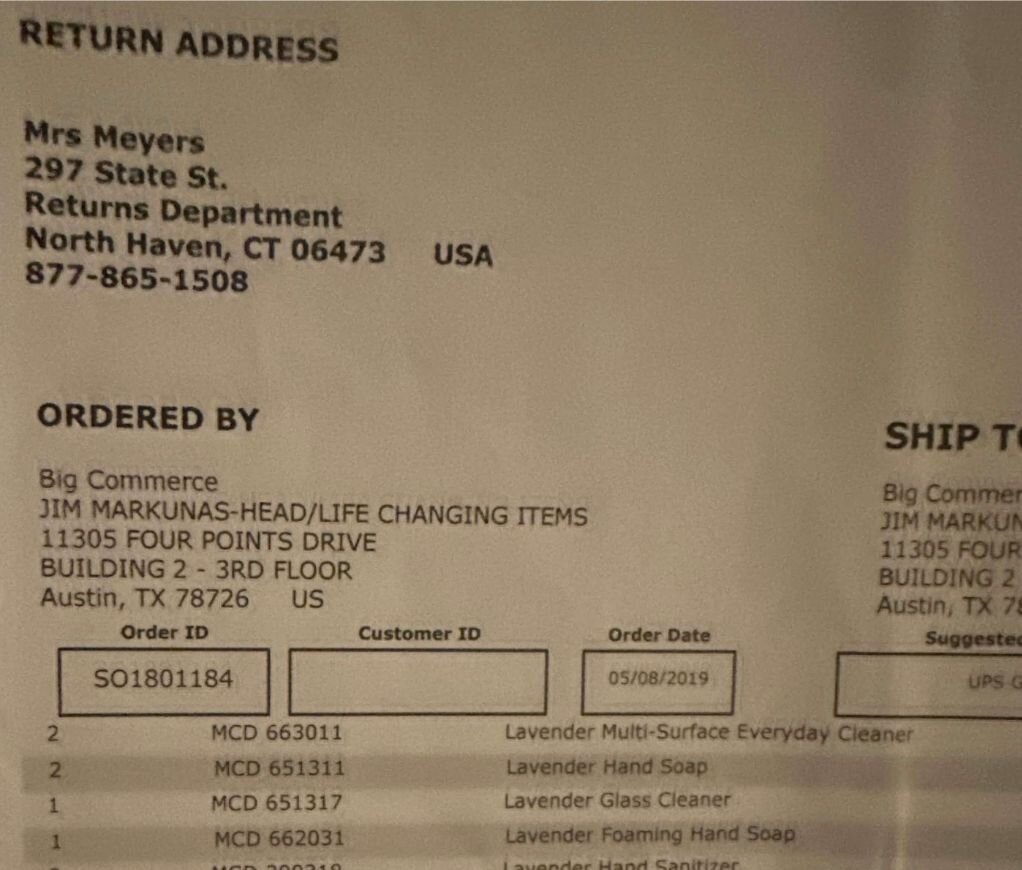
At CPS Energy in San Antonio, there was no commercial sale to hide behind. The pain showed up when the company made the evening news (in a bad way), but the green flags showed up when a broken public service got easier to use, became faster to respond, and won an international award for changing how cities get to Net Zero while cutting costs and making customers happy.
Not every green flag is good… At Human Headphones, early demand looked great on paper, but the business underneath it was too shaky to hold the line.
That’s what people miss when they talk about product market fit like it’s some magic sales moment. It’s all about whether the product, the operation, and the business are strong enough to survive real-world use.
1. Customers were already trying to solve the problem, but the path was clumsy
Sometimes, the demand is already there, but the company hasn't built a clean path to capture it.
That was the case with Method, the household cleaning brand known for stylish packaging and eco-friendly products. Before I helped Method make their first leap into direct-to-consumer eCommerce, customers already loved the brand, trusted the products, and bought them through retail. The challenge wasn't convincing people to care. That part was done.
The challenge was giving customers a better way to buy.
For anyone outside the eCommerce world, direct-to-consumer just means a brand selling straight to the customer through its own website instead of relying only on stores like Target or Walmart. That matters because the direct channel gives a brand more control over the experience, the data, the merchandising, and the relationship. They also don't have to split their revenue with middlemen.
With Method, the early green flags weren't mysterious. Conversion held up. Average order value climbed. Customers didn't just browse out of curiosity; they bought with purpose. Over time, that momentum turned into more than 20 percent growth in direct-to-consumer revenue without cannibalizing their retail business.
When customers already want the product, already know the brand, and quickly adopt the cleaner buying path you give them, you're not inventing demand. You're finally getting out of its way.
2. Growth made the larger business stronger, not weaker
A lot of people confuse growth with fit. Bad growth creates strain and enrages your partners. It exposes weak systems, screws up pricing, and turns your organization into a knife fight. So when I'm trying to judge product market fit, I don't just ask whether the numbers went up. I ask what the growth did to the rest of the business.
I led Mrs. Meyer's into digital commerce. They sell household cleaning and home care products with a strong retail presence across major chains. That retail footprint is exactly why their direct-to-consumer launch mattered. If the company launched its own online channel badly, it would create channel conflict with retail partners like Amazon, Walmart, and Target. Channel conflict means partners get nervous, pricing gets messy, and everyone starts protecting their turf instead of growing together.
And that's where people get lazy. They hear "launch a DTC site" and think the job is done once the site exists. Or, they're afraid it’ll cannibalize their partnership revenue, so they sandbag it.
In the case of Mrs. Meyer’s, the job was to make mrsmeyers.com additive. The direct channel needed to give customers something worth coming for: exclusive bundles, limited editions, a digital experience that felt useful, while still respecting the existing retail ecosystem.
That's what made their early results meaningful. Traffic rose and consumer response was strong. Direct-to-consumer revenue grew by more than 15%. Just as important, retail didn't collapse, partners didn't revolt, and the back-office and fulfillment operation absorbed the growth instead of choking on it.
That's a much better signal than a one-month sales spike. When growth makes the whole business stronger, you're seeing something real. When growth makes the larger ecosystem look weaker, confused, or unstable, you've got a problem.
3. Systems started responding better under real-world pressure
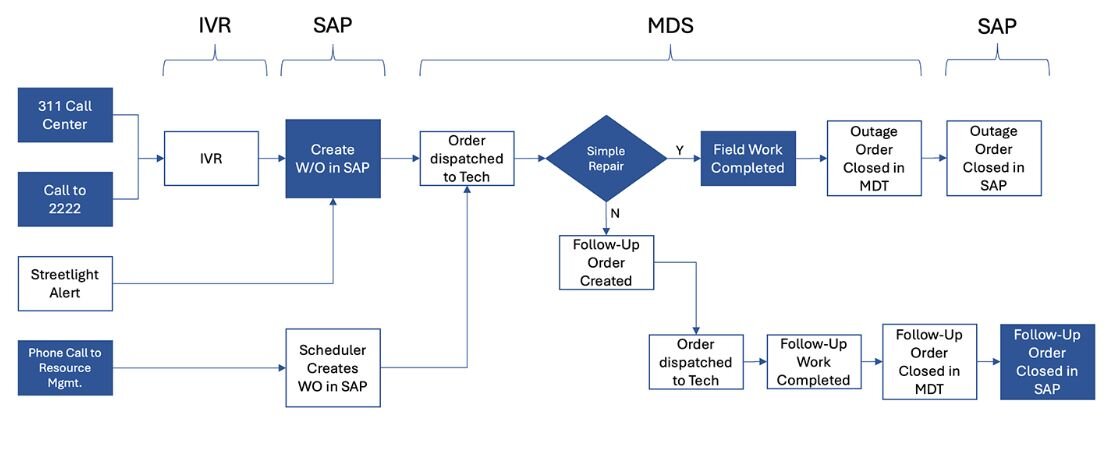
Sometimes product market fit shows up when a service gets easier to use, more responsive, and more trusted under real-world pressure. That’s exactly what happened with my smart streetlight project at CPS Energy.
CPS Energy is the nation's largest municipally owned utility, with non-profit revenues in the billions. Their Smart Streetlights program wasn't some shiny innovation lab project looking for a press release. It started because the public was enraged. CPS made the evening news, and not in a good way. Broken streetlights stayed broken too long. Outages dragged on. Residents were frustrated, called their local Fox affiliate (or News UK for those of you across the pond), and all the dirty laundry aired on the evening news. CPS wasn't dealing with a quiet operational defect anymore. They were dealing with a public trust problem.
The city approved major funding and brought in Dalkia, a third-party streetlight vendor, to help modernize the operation. The scope was bigger than replacing a few lightbulbs. CPS needed to move more than 200,000 streetlights toward greener infrastructure, connect Dalkia's work management and field activity into CPS's SAP environment (the back-office system that runs most of the utility's operations), create a better path for both internal staff and residents to report outages, and give customers visibility into repair progress instead of trapping them in a dead-end support loop.
That last part matters. When people don’t know what’s happening, they assume nobody’s in control. And most of the time, they’re right.
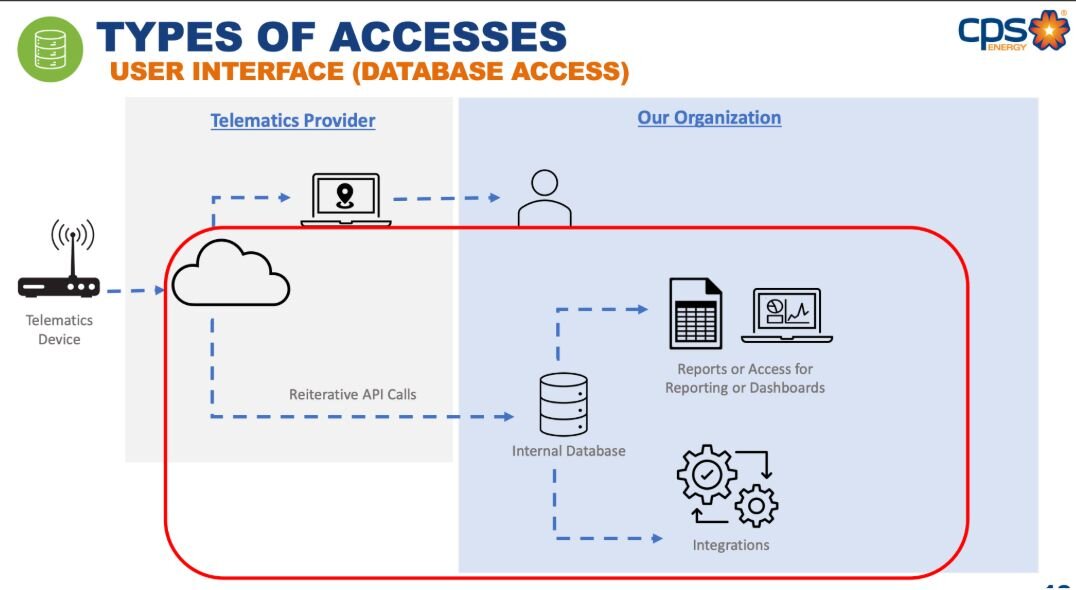
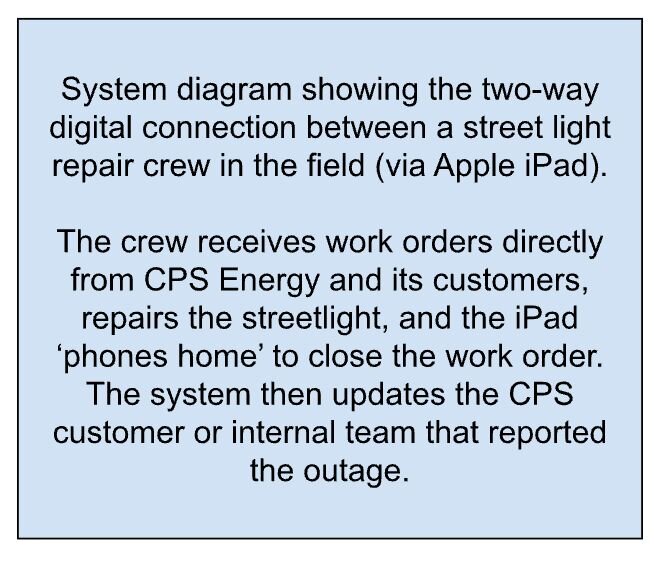
Once the new model started working, the green flags were obvious. Residents could report outages digitally. They could identify the exact streetlight on a map. They could get notified once the repair was complete.
Internally, CPS and Dalkia had a cleaner process for dispatch, repair, and tracking.
And then the hard proof showed up.
Repair-related calls dropped by 73 percent. Repair windows improved from roughly three weeks to 1≤ 4 days. Truck rolls dropped by 43 percent. The initiative later earned a 2025 Global Smart 20 Award.
That’s product market fit in a public-service environment.
Nobody was buying detergent or headphones. But people changed their behavior. The system got better under pressure. The service became more visible, more measurable, and more trustworthy. That counts. In some ways, it counts more, because city-scale trust is a hell of a thing to win back once you’ve lost it.
4. Leadership and operations stayed aligned after launch
The final test that separates a hot launch from a real business… Can the organization hold the line after demand shows up?
Human Headphones is a cautionary tale. At human, Inc., first-month sales hit $1.5 million, a number that got everyone’s attention, and fair enough. Customer interest was real. People wanted the product. Neither Atlas nor the market were shrugging, but early sales only tell you one thing… people care enough to buy.
Early sales don’t tell you whether the company behind the product has the financial backing, operating discipline, manufacturing readiness, and leadership alignment to keep going once the first wave hits. And in this case, big revenue first week sales & customer support wasn’t strong enough to keep the axes at bay. Funding and operational stability broke down, production stalled, and distribution couldn’t keep pace.
That’s the trap.
A lot of founders and executives see early revenue, secure a Series H funding round from Goldman Sachs, or close a deal with SC Johnson and Son, and start acting like they’ve already won. They haven’t. The graveyard of empires is littered with the bones of executives that celebrated too early at the expense of operational stability.
Early demand proves interest. That’s all. If leadership and operations fall out of sync the second the business gets tested, the product can still die with money in the bank and customers wanting more. And that’s why I never judge product market fit on demand alone.
So What Do You Actually Do With This?
You don't declare product market fit. You recognize it. And you build the conditions that let it show up.
Try this at home!
1. Map the clumsy path first
Before you build anything, find where customers are already solving the problem badly. Uber didn't invent the need for a ride. It found people waving at cabs in the rain and gave them a button. Your job is to find the rain.
2. Stress-test the ecosystem, not just the product
Growth that makes your partners nervous, your ops team anxious, and your supply chain shaky isn't product market fit. It's product market friction. Here's how to find the cracks before your customers do:
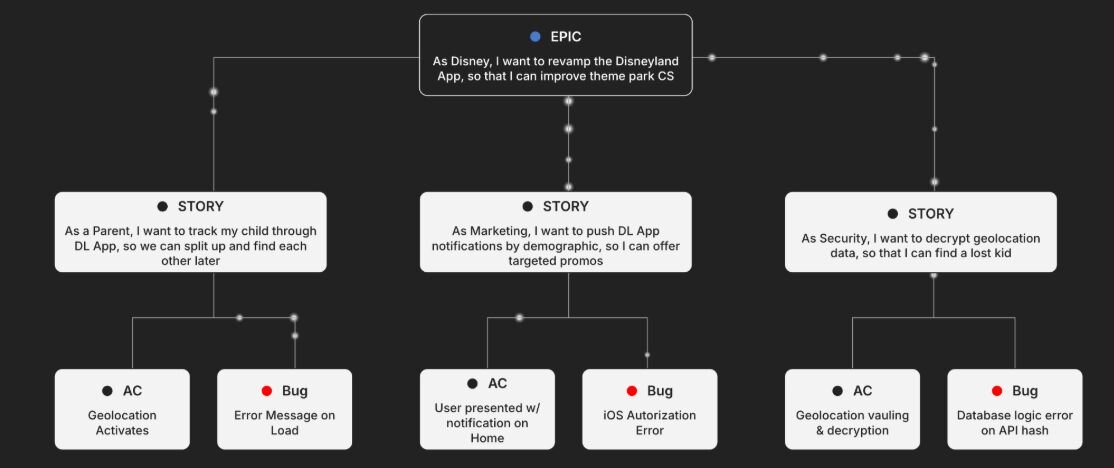
- Build a Work Breakdown Structure. Decompose every fulfillment, support, and production process into discrete tasks. If you can't draw it, you can't break-test it.
- Centralize your process documentation in a tool like JIRA or Confluence. Every workflow that lives in someone's head is a single point of failure.
- Map your system integrations and flag the weak points. Draw the full picture: ERP, OMS, 3PL, payment gateway, CRM, storefront. Where there's no retry logic, no alerting, and no fallback, that's your risk zone.
- Name your technical debt and build a payment plan. Technical debt is like a credit card you went a little too wild using. List every shortcut and legacy dependency, then assign sprint capacity to pay it down alongside your feature roadmap, not instead of it.
(Pictured: Example JIRA WBS structure)
3. Watch the systems, not just the scoreboard
The CPS Energy signal wasn't a revenue chart. It was a 73% drop in repair calls. Behavior change is the signal. Revenue is just the confirmation. Here's how to catch it:
- Instrument your analytics before launch, not after. If it isn't tracked on day one, you'll spend weeks arguing about what actually happened.
- Centralize your dashboards into a single source of truth. Fragmented reporting creates fragmented decisions. Commerce metrics, ops metrics, and support metrics should all live in one view that everyone reads.
- For extra credit: deploy autonomous AI agents alongside human monitoring. AI agents can flag anomalies and surface behavioral shifts faster than any dashboard review cycle. Pair them with human judgment. Don't replace one with the other.
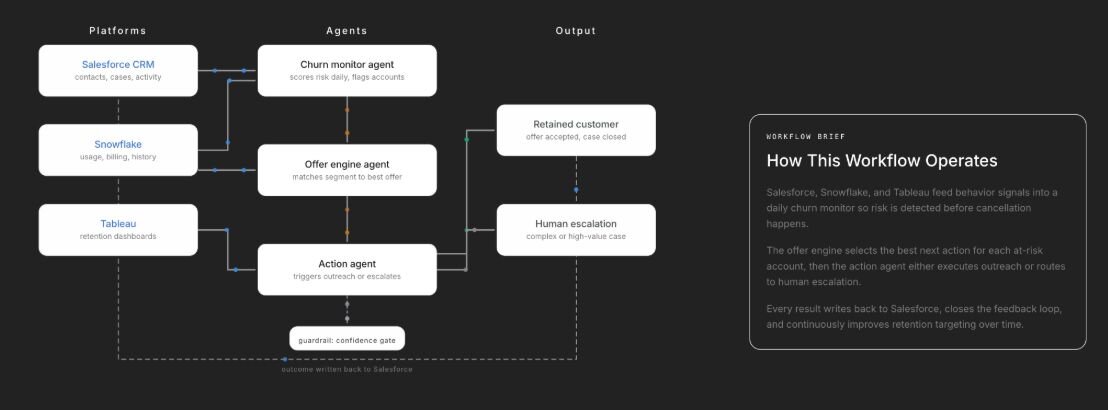
(Pictured: system diagram for autonomous reporting using SalesForce, Snowflake, and Tableau)
4. Hold the line after launch
Most teams declare victory the month the product ships. The real test is month four. Here's how to survive it:
- Build your hypercare roadmap before you go live. Hypercare isn't a vibe; it's a plan. Define the first 30/60/90 days: who owns what, which metrics are monitored daily, what thresholds trigger escalation, and when the team formally stands down.
- Implement the automated reporting you built in step 3. Schedule reports to hit stakeholder inboxes before they think to ask. Nobody should be chasing numbers the week after launch.
- Practice PM PR. Send a weekly or bi-weekly executive update that leads with wins, flags risks early, and shows momentum. Executives who are surprised by problems become your biggest obstacle. Executives who feel informed become your biggest advocates.
So what am I actually looking for?
I'm not looking for one magic metric. I'm looking for a pattern that holds up under stress.
I want to know whether customers were already leaning in, whether a better path unlocked that demand, whether growth made the surrounding business stronger, whether systems got more responsive when real people started using them, and whether leadership had the discipline to keep the machine running after launch.
That's why product market fit is an operations story. A channel story. A leadership story. A trust story.
When people change their behavior, when systems adjust instead of break, when partners stay bought in, and when the business gets stronger instead of more fragile, that's when I start paying attention.
A pattern. That's the real green flag.
Not one good month. Not one flashy press release. Not one executive claiming victory because a dashboard looked sexy for five minutes.
Because when the pattern is real, the product doesn't just launch.
It lasts.
Want the Process Map?
Everything in this section is packaged as a free, printable checklist: four sections, sixteen action items, ready to run before your next launch. Download the Product Market Fit: The Operator's Pre-Launch & Post-Launch Checklist at greatestpmever.com/freebies. Print it. Work it.
