A lot has changed since Emily Andrews started her career in product management nearly 15 years ago; however, though the industry is in constant flux, product teams continue to grapple with the same set of fundamental questions.
“We’re still debating questions like: where product should sit within an organisation, what it should own, and how accountability is divided between product and business partners, even as AI accelerates at a breakneck pace,” she says. “This tells me that while core product management principles are compelling, applying them rigidly in large, complex organisations can be counterproductive.”
In her keynote at Mind the Product Chicago this year, Emily, now VP of Product at McDonald's, explored these challenges and offered insights on navigating the complexities of modern product leadership.
Watch the video in full, or read on for her key points:
Why RACIs don’t work
To kick things off, Emily explains how RACIs (responsible, accountable, consulted and informed) can clarify accountability, but assigning responsibilities does not necessarily improve the decision. “You end up spending time debating over who owns the A or the C,” she says. “It’s not practical for the problem we’re trying to solve.”
Instead of focusing on who owns what, she believes product teams’ precious time would be better spent on trying to drive alignment and build trust. Rather than focusing on who owns what. To this end, she dispels three big myths—what she calls the three sacred cows—of PM work.
Sacred cow 1: Product should own prioritisation
Giving a product team ownership of prioritisation can protect customer focus and create coherence. However, it risks becoming territorial when teams interpret that ownership too literally.
“It’s so easy to take these principles and determine that this is the way it’s supposed to be. But it’s how you apply them. We burn energy trying to own the decision, rather than trying to improve the decision,” she says.
Emily proposes a shift from decision owner to decision architect. In other words, the PM creates the conditions for an informed decision—emphasis on the “informed”. She adds it’s important that PMs emphasise this when talking to stakeholders to secure buy-in, build trust, and get brought in earlier.
Sacred cow 2: Product should be the voice of the customer
This framing implies that the product team owns the customer perspective, or that customer needs are the only consideration. But the value of the product, Emily believes, actually lies in tying customer needs, business realities, and technical possibilities all together.
“We need to honour all of those voices to make those outcomes better,” she adds.
Sacred cow 3: Clear decision rights solve organisational friction
“Decision rights matter. Absolutely. They can clarify accountability. They can stop this endless spin. But clarity alone cannot make people behave or believe in the judgment behind a decision.”
Emily believes this is a question of trust: when trust is low, organisations compensate with more process; when it goes up, people are better equipped to solve problems together. “I'm sure we've all felt this,” she adds.
She learned this earlier in her career when a senior operations leader challenged her almost as soon as she entered the room. She explains that, later on, she realised they simply had not known her long enough to trust her judgement. Building that trust requires competence, delivery, and transparency. “So when you build it, you become the person that people call on before, and the problem eventually becomes a request,” she adds.
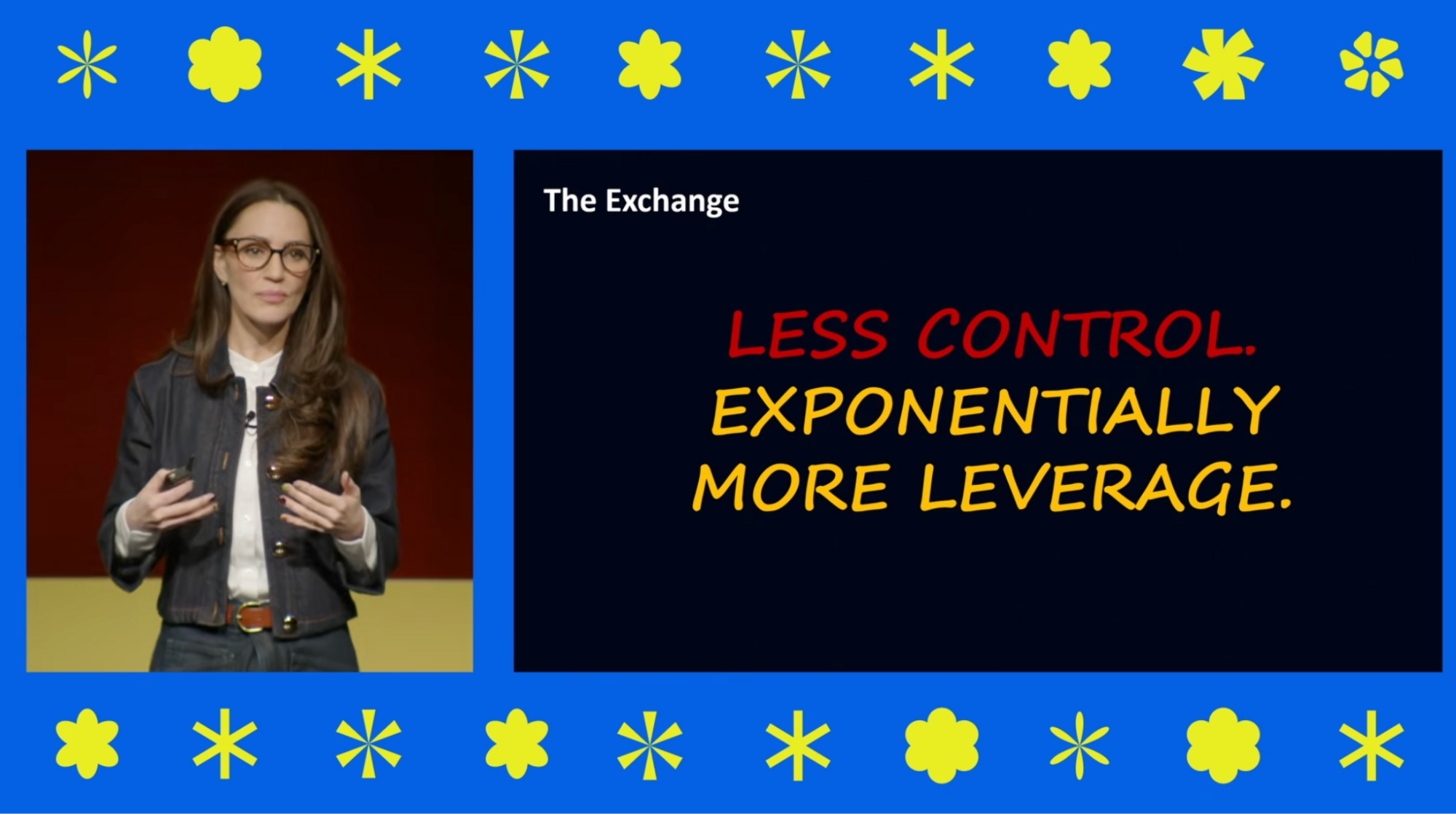
When you reach that end goal of being less fixated on ownership, it will feel like you’re less in control, but over time it’ll give you far more leverage. Although you have less control, she stresses, this does not mean lowering your standards.
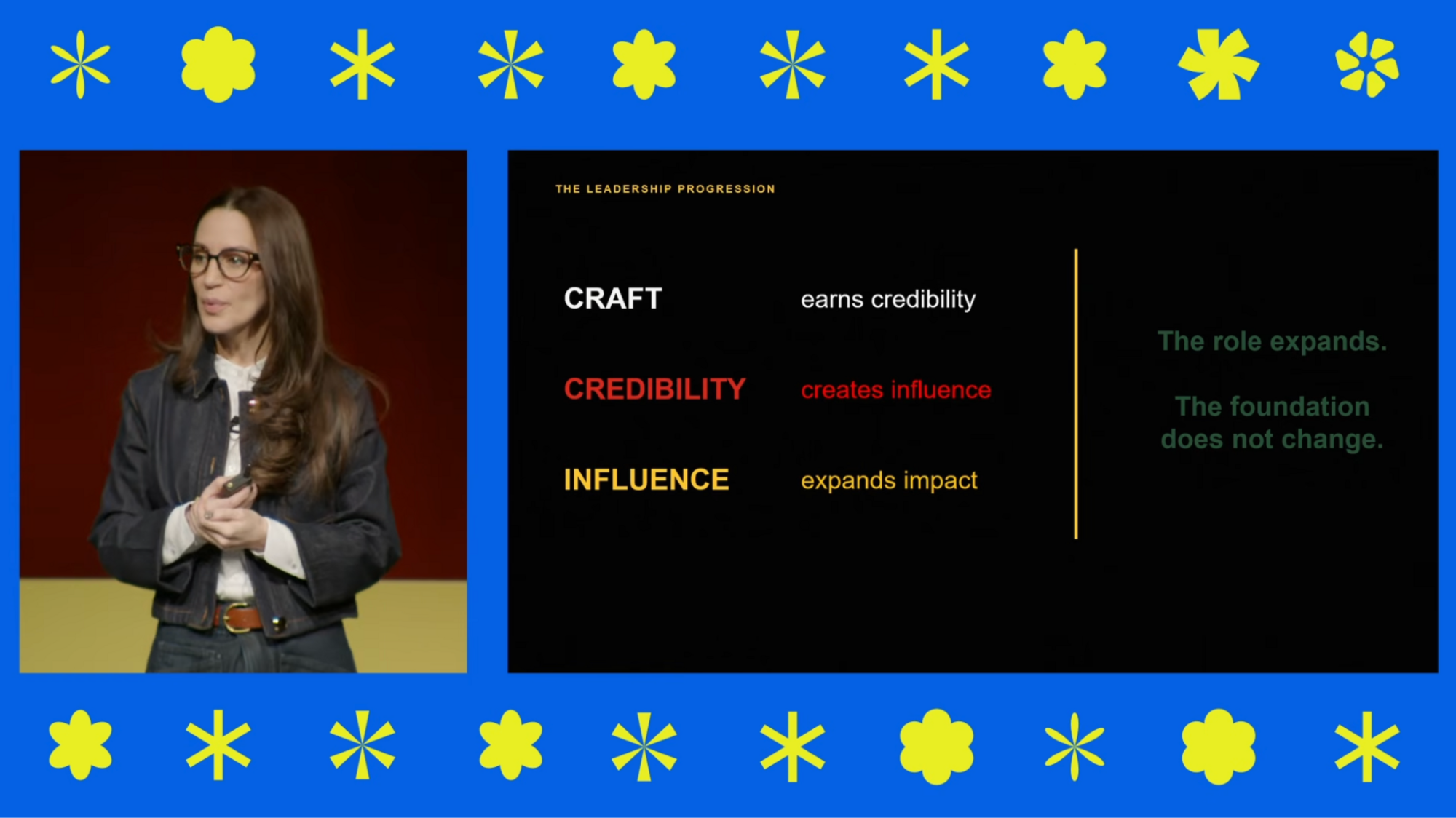
Here is how Emily sees this equation, where each new step builds on the previous one:
- Craft → Earned credibility
- Credibility → Influence
- Influence → Expanded impact
So once we reach the pearly gates of expanded impact, how do we continue dealing with challenges in an empowered way? Emily says she uses these four questions to move past every roadblock:
- Are you protecting the roadmap or the outcome?
- Are you defending the method or adapting it to the problem?
- Are you seeking authority or protecting the collective decision?
- Are you measuring product maturity by control or by the impact and the outcome?
She closes by sharing one final opportunity (and an implicit challenge) for product leaders: Product leadership is not proven when the product is in control, but when great outcomes occur regardless.
