In his session at #mtpcon London 2026 on the ProductTank stage, Dan Dalton, Director of Product at Sage, explained why Product Management needs more builders, and fewer bureaucrats.
Watch the video in full, or read on for his key points!
From the dawn of time until 2010, Product management was a business function, Dan says. From 2010-2015, the role was recognised as a Technology function. “Early on, a lot of PMs were out getting our Agile and Scrum certifications, it was less of a strategic role,” he explains.
The rise of Unicorn companies from 2015 made product one of the most in-demand roles in the market, due to the success of product-led companies. From 2018-2021, Dan shares how the cult of best practices emerged, which created tribal product cultures and a booming marketplace for content, courses, and frameworks.
Then struck 2021, where mass layoffs struck the product management space. This resulted in a boom of the Creator economy, with a plethora of thought leaders entering the space.
So where does that leave us now? Dan names it as 'The Siege of Product Management', where the roles of product professionals are consistently under scrutiny.
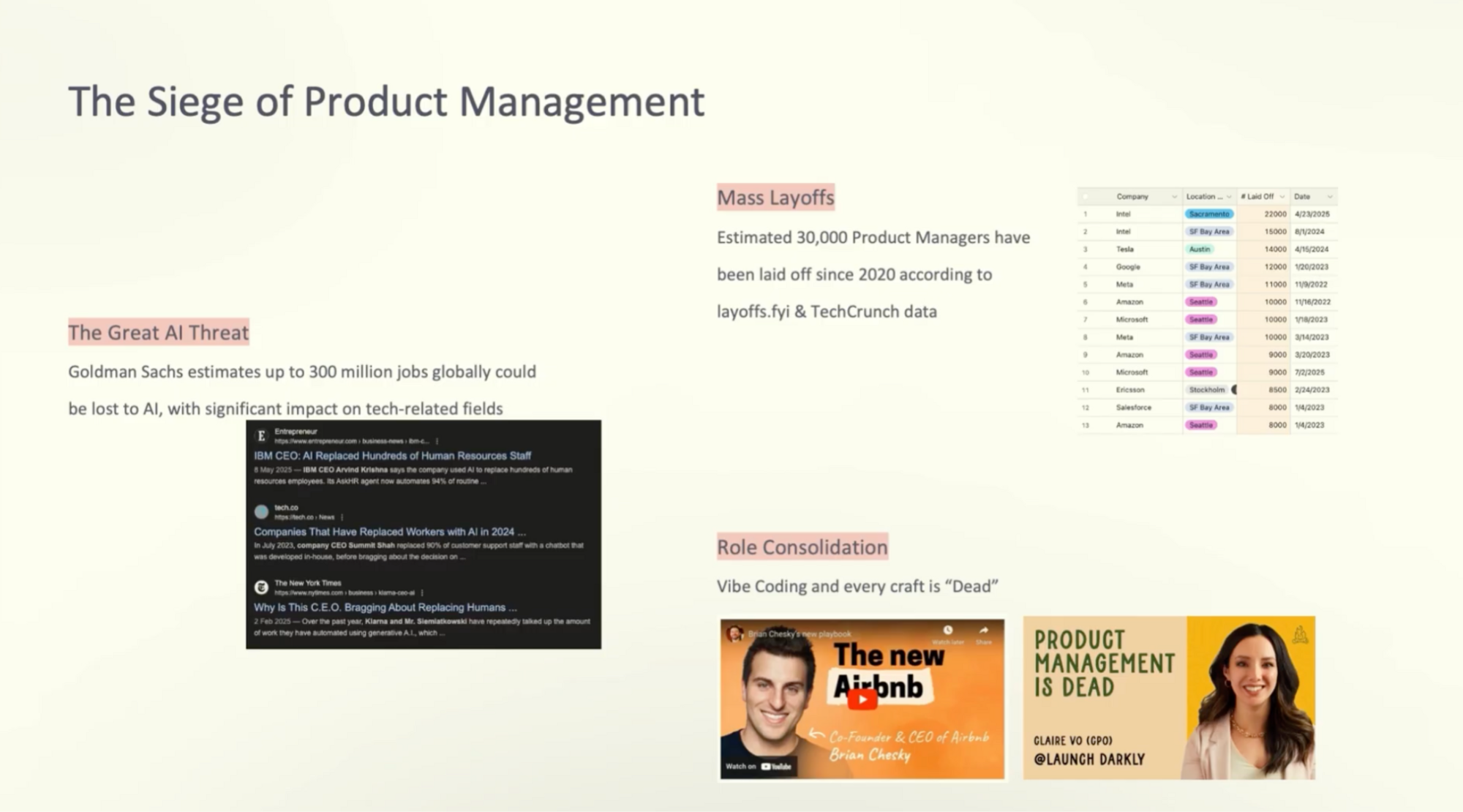
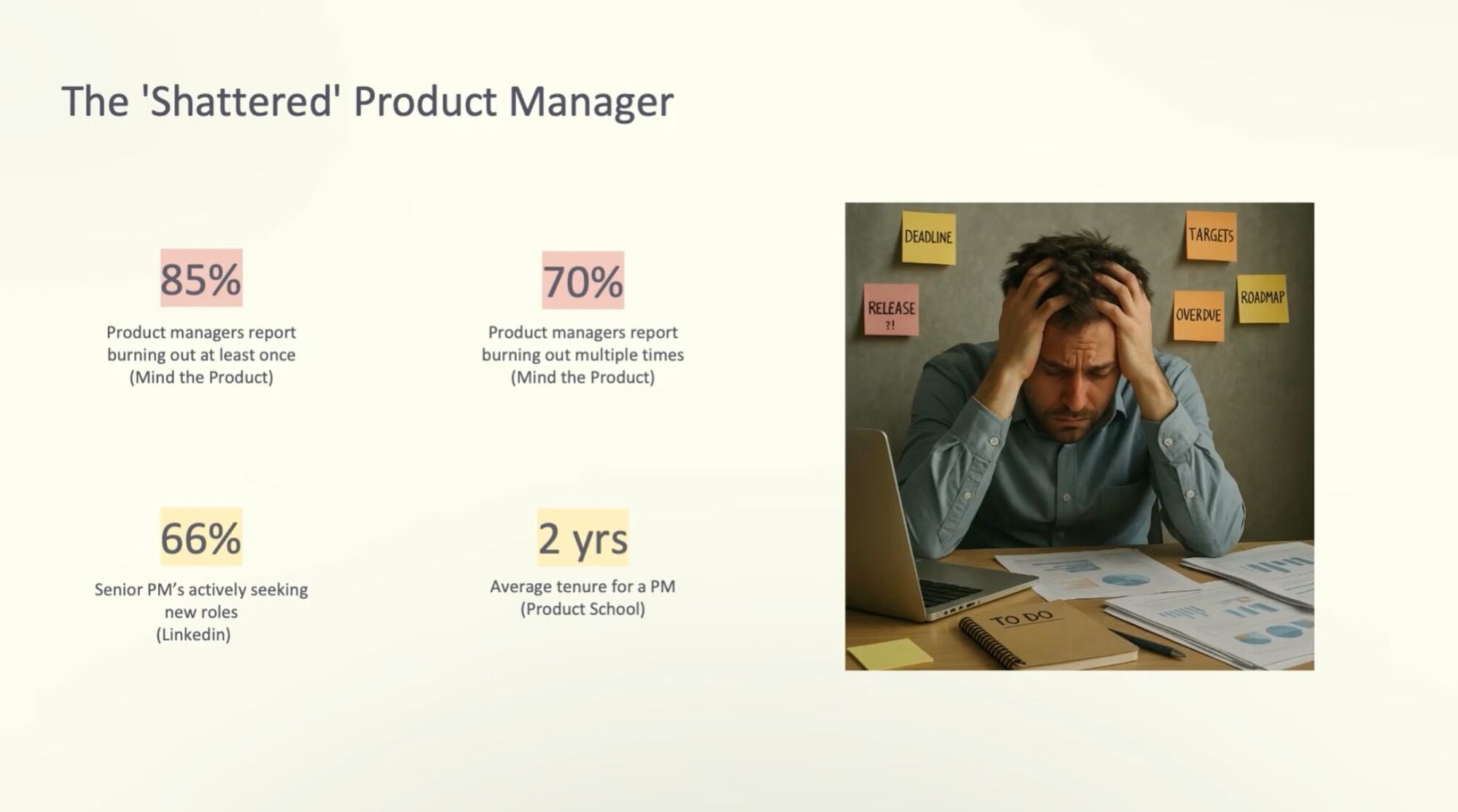
He adds that 85% of PMs have experienced burnout at least once, with 70% burning out in multiple roles. He argues that the same system that elevated our craft is now eroding it.
He breaks down the key things eroding the system:
- Framework fundamentalism: On average, lists of ‘essential frameworks’ have 15 entries per list.
- Thought Leaders: 58% of 2025’s Top Google PM results come from creators with less than three years of experience.
- Seniority without scars: 23% of executive product leaders reach director level positions with 2-3 years of experience, compared to 9% in 2015.
- Strategy theatre: HBR reports that 50% of PMs conflate strategic planning with strategic thinking.
Dan argues that in the age of AI, Product itself isn’t under siege, but the org structure and process of it is. Therefore our values need to reset.
AI is unlike anything we’ve seen before, just like everything we’ve seen before, Dan says. Once we ride the hype-cycle we end up coming back to the centre. He adds that we have started to see fundamentals of product management appear once again: Taste, Scars, and Intuition. He spent the remainder of his talk breaking down all three:
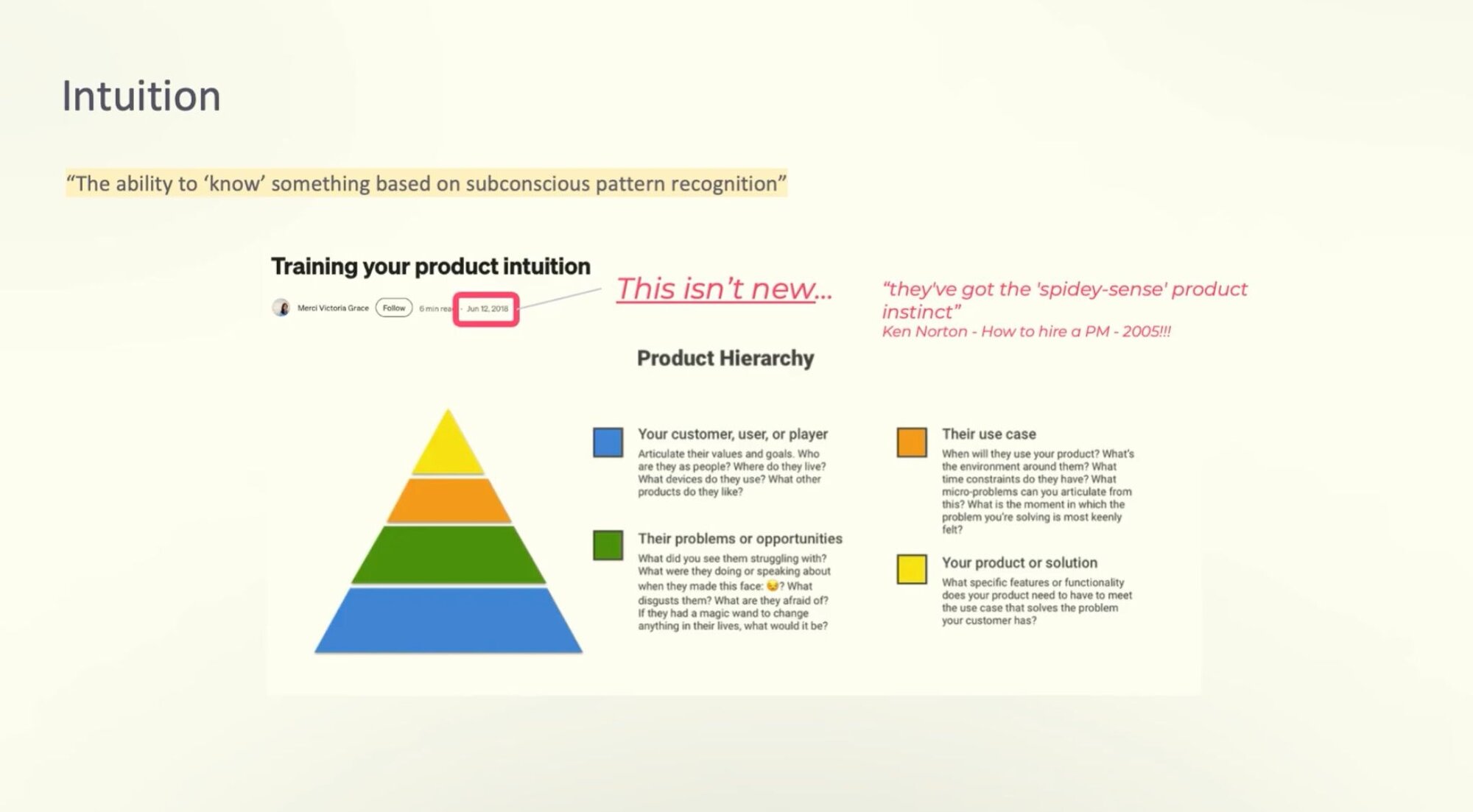
Intuition: The ability to know something based on previous subconscious pattern recognition
Product intuition can be boiled down to having a really good gut feeling of the fundamentals of your product, Dan explains. This starts with knowing your customer, then knowing the marketplace, knowing your product, and finally, knowing how you make money from it.
Building product intuition is something you train like a muscle, Dan says, it comes from years in the field.
Product Taste
Dan says that most people think product taste means product design, which is half right. Taste shows up in the feature everyone loves that nobody asked for, he says. Like intuition, Taste is trainable by doing product tear-downs and understanding what a version of 'good' looks like.
AI gives you the average of everything that could exist, Dan explains. Product taste is what makes you elevate that average benchmark, and understand what good looks like for you and your customers.
Scars
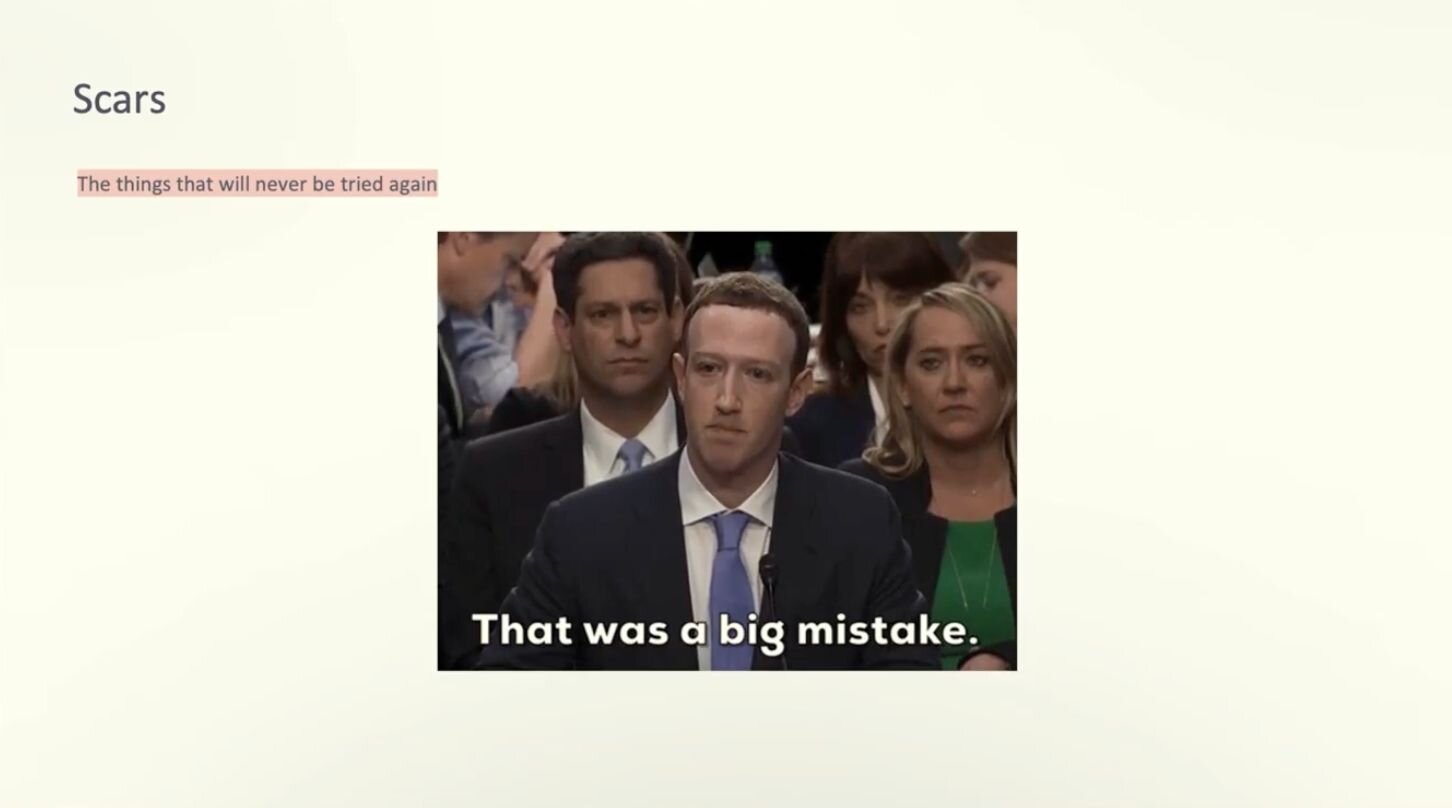
Scars in a nutshell are the mistakes that you will never make again. It’s about knowing where reality checks you very hard. Just like Intuition and Taste, Dan says previous experiences will help you learn and grow.
The fundamentals of product are the future
Where we need to be right now is to not lose sight of the craft, Dan stresses. “The tools that got us here will not get us to the next phase of product delivery and innovation.”
Most people are in the profession because they want to build cool stuff, Dan explains. AI is now giving us back some time to think. What is more valuable now more than ever is the fundamentals.
Intuition is your error detection, while Taste is something to be developed. There has never been a time when more software existed, Dan points out, so go out and look at what's good, what's bad, and develop what 'good' means for you. Scars are the part AI makes urgent. AI will 100x your opportunities to get it wrong, Dan warns. It is on us as a craft, as a community, and as individuals to invest our time in problems that shouldn't exist. Stay in the things that hurt enough when they go wrong, and stay in them long enough that you can develop from it, he closes.
