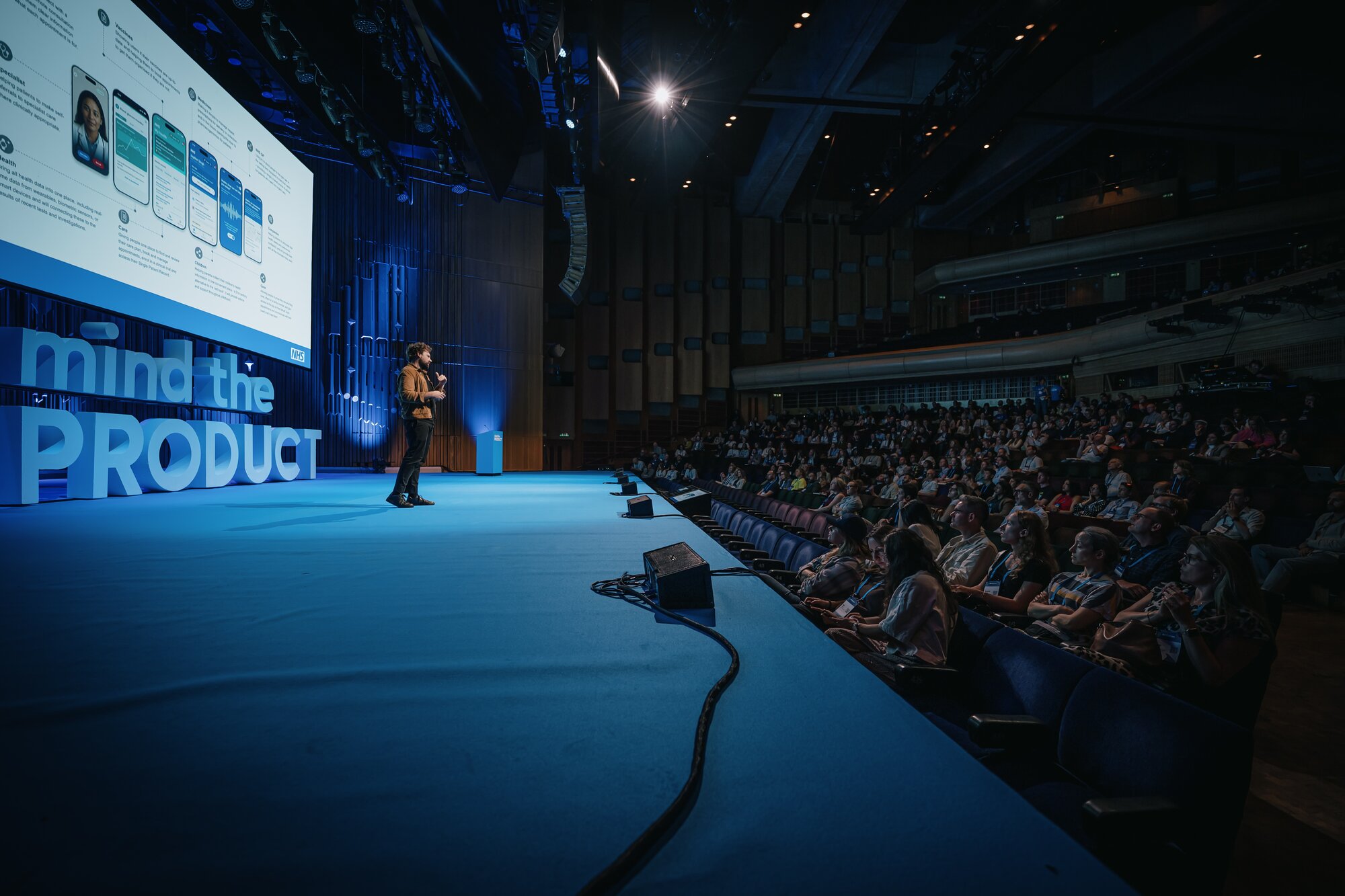
Ben Cook, Deputy Director of Product at the NHS, opened his talk at #mtpcon London 2026 with a piece of advice that he still remembers from his first product job. When things went wrong, his mentor always said the same thing: "Don't worry guys, we're not saving lives." Years later, that mentor called with a job offer at the National Health Service (NHS), with their core mission being to save lives...
He delivered an engaging session full of real-world examples on how he innovates at a complex organisation like the NHS.
Watch the video in full, or read on for Ben's key points.
Enter the NHS app
Ben leads product on the NHS app, the digital front door to England's health system. Patients use it to contact their GP, view test results, order prescriptions, manage hospital appointments, and receive messages without waiting weeks for a letter. 70% of eligible people in England have used it at some point, while around 30% use it every month.


Ben explains how the ddoption of the app surged during the Covid-19 pandemic, and today, the challenge Ben's team face is to innovate the app for three use-cases:
- The patient: how to make navigating the health system less stressful and more accessible for people who don't regularly engage with it.
- The frontline: 1.5 million people work in the NHS, and 40% experience workplace stress and burnout. Anything that automates a process, surfaces the right information at the right moment, or reduces the cognitive load on a clinician matters.
- The system itself: England spends £240 billion a year on health. Every workflow automated, every policy decision improved by better data, every safety improvement that prevents an error is worth pursuing.
What the next three years look like
In July 2025, the UK government launched its 10-year health plan which set out three shifts: analogue to digital, sickness to prevention, and hospitals to communities. The NHS app features 42 times in that document. Additionally, many of their targets are to be completed by 2028. Ben broke down three areas the team is working on to complete the 10-year plan.
The first is AI-assisted triage. Three in four patients don't know where to go when they get sick, Ben cites. Many default to A&E or a GP. This drives demand into the most pressured settings while faster alternatives go unused. Trials in Australia found that putting an AI triage tool at the front door of an A&E redirected around 30% of people to somewhere that could see them faster. In the NHS app's own early pilots, about 40% of people contacting their GP are being recommended a pharmacy, remote messaging, or self-care and accepting it. “Doing this has taken the pressure off of the frontline, but also increases the chances of the healthcare system being there when we need it urgently." Ben explains.
The second is building a virtual hospital. They built this for conditions where no physical examination is needed but wait times are long. Patients can choose to receive treatment through the app, messages from doctors, video consultations, and prescriptions sent to a local pharmacy. Ben forecasts that 8.5 million appointments in the first three years wouldn't otherwise happen, which frees up hospital space for patients who genuinely need it.
The third is disease prevention at population scale. 40% of the NHS budget goes on preventable conditions. England has targets to eradicate cervical cancer by 2040 and drive HIV transmissions to zero by 2030. The only way you can do that, Ben explains, is to screen the population routinely, ensure that they’re taking vaccines, and get the whole population to care about their health. He explains that if you can order a test from your home through the NHS, you can cover more ground and get to that population-level coverage much easier. "If you think about that mantra of saving lives," Ben says, "the impact of this is huge."
Why innovation in a place like the NHS is hard
Ben walks us through a few of the key challenges from innovating at legacy orgs:
Legacy technology is everywhere and it's not easily replaced. The NHS is a fragmented set of trusts, hospitals, community practitioners, and regional bodies, each with their own systems and autonomy. "If you were dealing with legacy tech in a bank or a retailer, you could go, 'We're just going to replace all the POS systems.' You can't really do that in the NHS in the same way." he says.
Designing for everyone is non-negotiable. Excluding any group from digital access to healthcare isn't an option. This shapes design processes in ways that wouldn't apply in most consumer contexts.
Everything requires clinical sign-off, Ben notes. Every feature that touches patient care has to be reviewed by a registered clinician, risks documented and mitigated. "That's the right thing to do" Ben notes, "but it does change how you deliver products."
And the stakeholders are unlike anything most product teams encounter. Ben plays a clip of the Prime Minister announcing the NHS app's roadmap on Sky News. "Nothing in this world ever prepares you for sitting there watching the news and seeing the prime minister make an announcement about your roadmap."
Three lessons for anyone working in a complex organisation
Start by learning everyone’s perception of value, then find one you all share
Reflecting on his time working at an airline, Ben explains how he ran experiments to improve booking conversion. He hit his conversion target, but the commercial director wasn't pleased because leisure customers book earlier and pay less than business customers, so the team had accidentally undercut the economics. So he pivoted to selling more baggage and the commercial director loved it. However three weeks later, it was revealed that they were selling too much luggage, so much so that bags were being left behind at Terminal 5.
The lesson from this was to go and live in the world of your stakeholders. Ben spent hours in the baggage halls of Terminal 5, watching the process play out in real time. He used staff travel to fly routes and experience directly what went wrong for customers. "You learn inside out what really matters to them by spending time with them." After you have spent time with the customer, you can then apply to your product practices.

Lack of feasibility and viability will sink your product
In most product contexts, value, usability, and feasibility feel roughly equal, however in a health system, feasibility and viability are the ones that challenge you. Can it run as a live service sustainably? Will the frontline actually adopt it? Is the Wi-Fi in the hospital reliable enough to make it work? These are all key questions that are important to adopting a new feature or product in a complex environment.
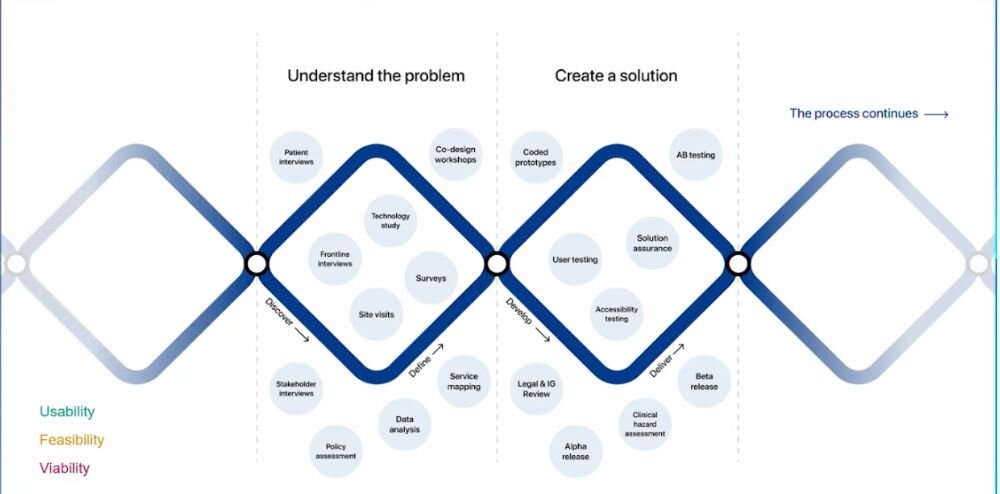
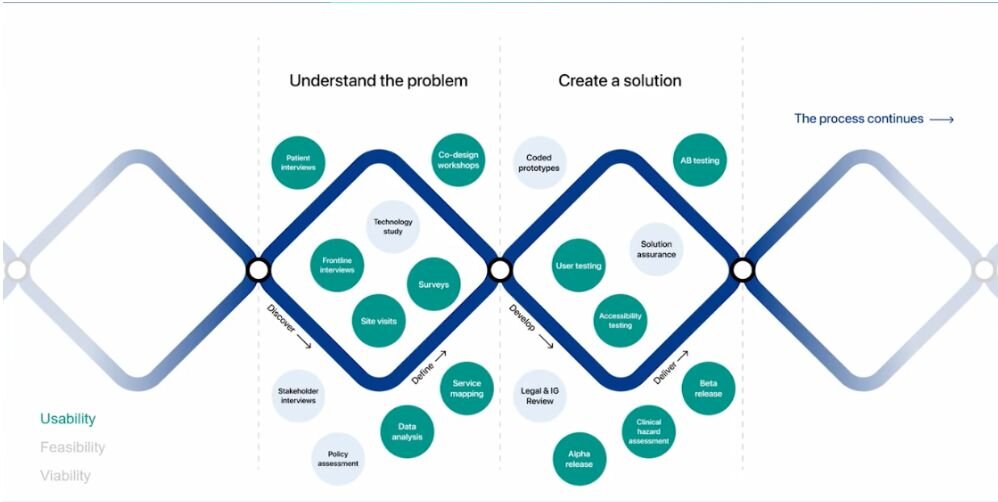
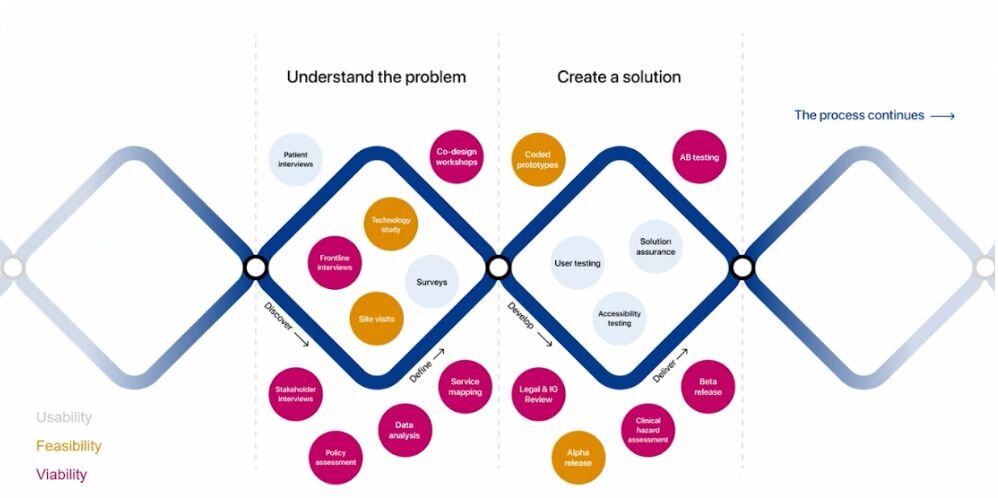
Ben advises to shift feasibility and viability as early as possible in discovery. Rapid AI-assisted prototypes can now test whether data flows work, and whether a clinician can realistically use something in their workflow. However don’t forget the user, they should be at the heart of every decision you make, Ben says.
Think big.
In an organisation like the NHS where it is spending £240 billion a year, it’s easy to see a 1% efficiency improvement generates enormous returns. That work is important to get continued investment and backing from internal stakeholders.
But if that's all the NHS app team did, they'd be leaving the larger opportunities untouched, such as eradicating a cancer or being there for someone sick in the middle of the night who doesn't know where to turn.
"Don't let the challenges that we've spoken about today get in the way of doing that. Think big, think radical, and go after the biggest opportunities you can, because they genuinely make a difference."
