April Dunford, author of Obviously Awesome and repeat VP of Marketing turned positioning consultant, took to the #mtpcon stage to discuss whether AI is changing the fundamentals of positioning. Her short answer…no. Her longer answer…it creates roughly a hundred new ways to get it wrong.
Watch the video in full, or read on for the key points.
What positioning actually is
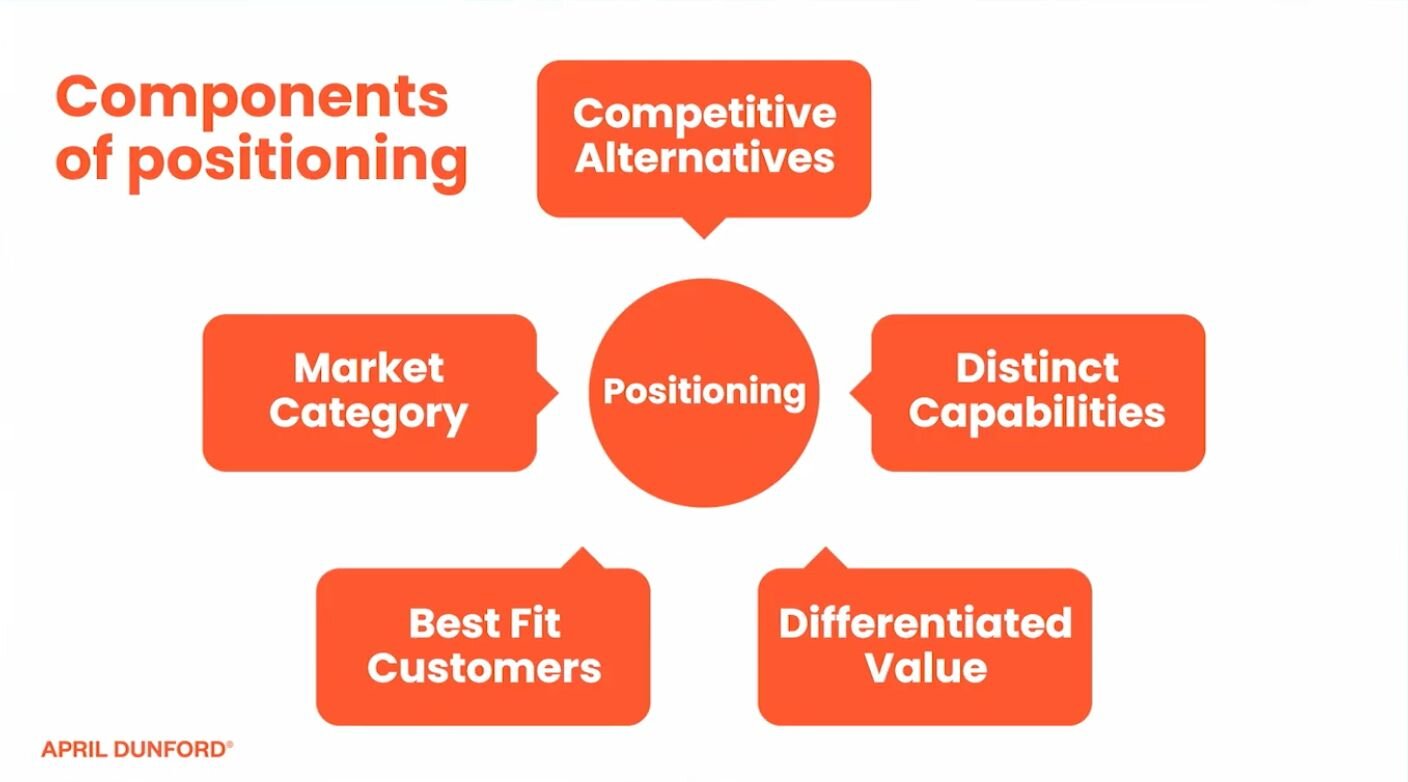
Dunford opens with a four-minute speed run of her positioning framework. Her definition is that positioning defines how your product is the best in the world at delivering something that a well-defined set of customers care a lot about.
The process runs through five stages:
- Competitive alternatives (what would a customer do if you didn't exist?)
- Distinct capabilities (what do you have that competitors don't?)
- Differentiated value (what does that capability actually do for a buyer's business?)
- Best-fit customers (who cares most about that value?)
- Market category (what's the right context to put all of this in?)

The key move, and the hardest, is the "so what" step. You might have a hundred differentiated capabilities on the whiteboard, but you can't have a hundred points of value. Customers can't hold that in their heads. You need one, maybe two, maximum three ideas that will provide something value to a customer, she explains.
The fundamentals hold. The execution doesn't.
Having worked with over sixty companies over the past two to three years, Dunford is confident that the core process of positioning doesn't break under AI. The problem is AI creates 100 new ways to make mistakes. She spent the rest of the talk on four of them.
One: You need a point of view
When markets are stable, Dunford argues, a point of view on the future is a nice-to-have. Nobody was asking Salesforce five years ago to explain what CRM would look like in a decade. But now customers are asking exactly that, she explains. They want to know whether to invest in a category at all, whether their vendor will still exist, or whether the thing they're buying will be vibe-coded out of existence in two years.
A point of view is about helping customers understand why your roadmap looks the way it does. "You've been reading all this stuff. You're deep on this stuff. This is your job. Tell customers what the future of this looks like." she says.
A point of view helps your customers understand why your roadmap looks the way it does. It helps prospects understand the choices you make, which they can then choose to agree or disagree with. She shared some examples with the audience to illustrate her point, citing AI and non AI-native companies.

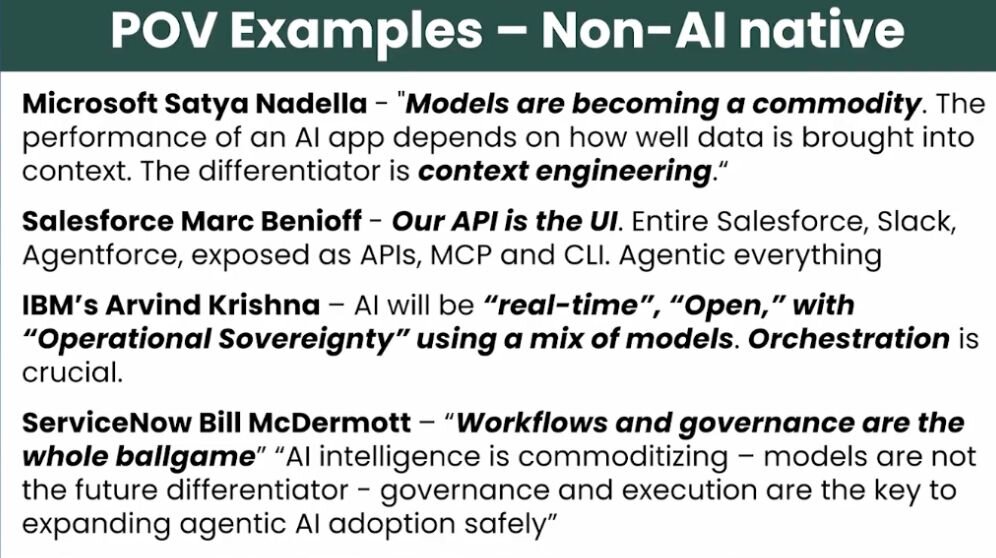
Every product has a different point of view on the future, April explains, think about your product and the stuff you're working on right now. "Do you have a point of view? When the customer asks that question, what do you say?"
Two: Position for now, build for the future
In February 2025, Dunford was running a positioning workshop with a company in the IT space. She asked the room: if you didn't exist, what would a customer do? The CPO said "vibe-code it." The head of sales said he'd never heard of Replit or Lovable.
That is where the real tension lies. Product teams think in horizons, they're building against competitors who will exist in a year or two, while Sales teams live in deals that are happening now. If they sold in the future, there would be no urgency for customers to sign up.

Dunford explains that positioning defines how you're the best in the world at delivering something against the competitors you have right now, in the market as it exists right now. The product vision and the current positioning are different things, and conflating them stalls deals.
"If I try to sell too far in the future, you know what the customer says? 'That sounds amazing. Come back in two years,'" she explains, "You're pricing yourself out of today's urgency."
As product people, it’s important to compete and build with what you have right now, but also be building for the thing in the future.
In the case of the IT management company, their real competitor right now is spreadsheets, legacy apps, and manual work. The vibe-coding threat is real, and they're building toward it. But walking into a deal and leading with "here's why we're better than Replit" introduces a competitor the customer wasn't considering. "The last thing you want to do," Dunford says, is hand a prospect a new research project.
Three: Hype the future (when you can) but connect it to today
Even when you have genuinely forward-looking AI capabilities, leading with them can spook buyers who aren't there yet, April explains.
One company Dunford is working with has a product vision of agents everywhere. But most of their enterprise prospects don't have a single agent in production. So instead of leading with the endgame, the sales team draws a maturity model.
- Step one: map and model your processes to identify where agents could apply.
- Step two: deploy agents to the lowest-risk use cases, with manual oversight.
- Step three: expand.
- Eventually reach the point of full human-agent orchestration.
"The more you can pull it back and relate this fancy, really far-forward-thinking stuff to where the customer is right now, the more successful you're going to be." That's the balance which is important to strike, meeting the customers where they're at to not risk allientaing them, whilst also bringing them on a journey to the future.
Four: Operationalise customer understanding
The last and arguably most systemic issue is that many companies make positioning decisions based on internal opinion wars, and nobody wins those correctly.
In Dunford's workshops, she asks a room of executives who they compete with. Product teams name horizon competitors, whoever they're building against in two or three years, while Marketing names whoever's running the biggest ad campaigns. For Sales teams, they name whoever keeps showing up on short lists, but never counts status quo or no-decision as a loss. Finally, the Founder either has a five-year-old mental model from when they were still doing deals themselves, or they're so deep in investor narrative that the pitch for the vision has blurred into their view of today's competitive reality.
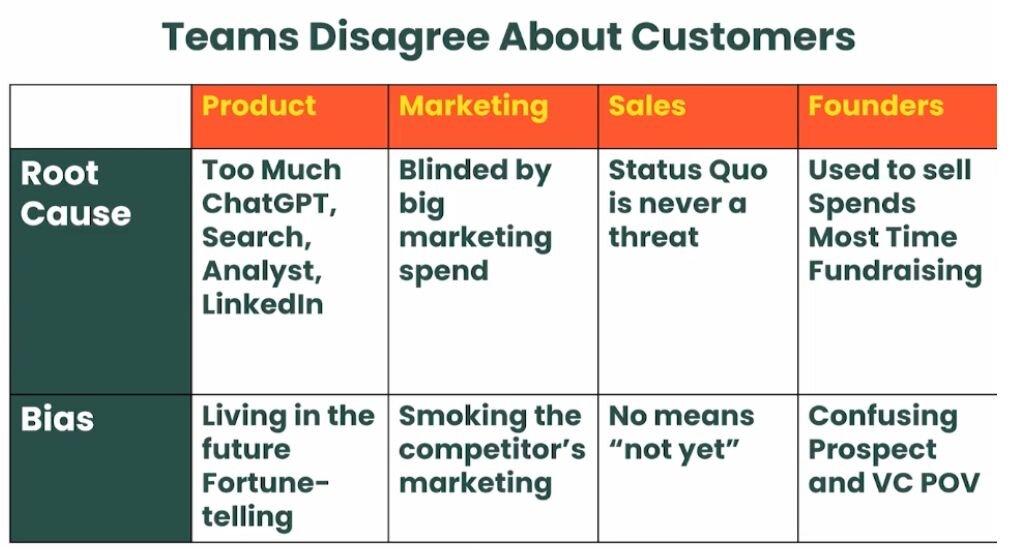
"If you're in a war of opinions with your CEO, you're not going to win. Marketing people, product people, we don't win that." The only weapon that works, Dunford argues, is actual customer data. And most companies aren't collecting it systematically.
"We are lousy at predicting the future," she said, citing the blockchain pivot at Square in 2021 and Zuckerberg's metaverse commitment the same year, both of which looked like conviction at the time. "All we got is customer stuff really to fight with."
We don’t need to revolutionise understanding our customers, she breaks down some examples of geting started with this:
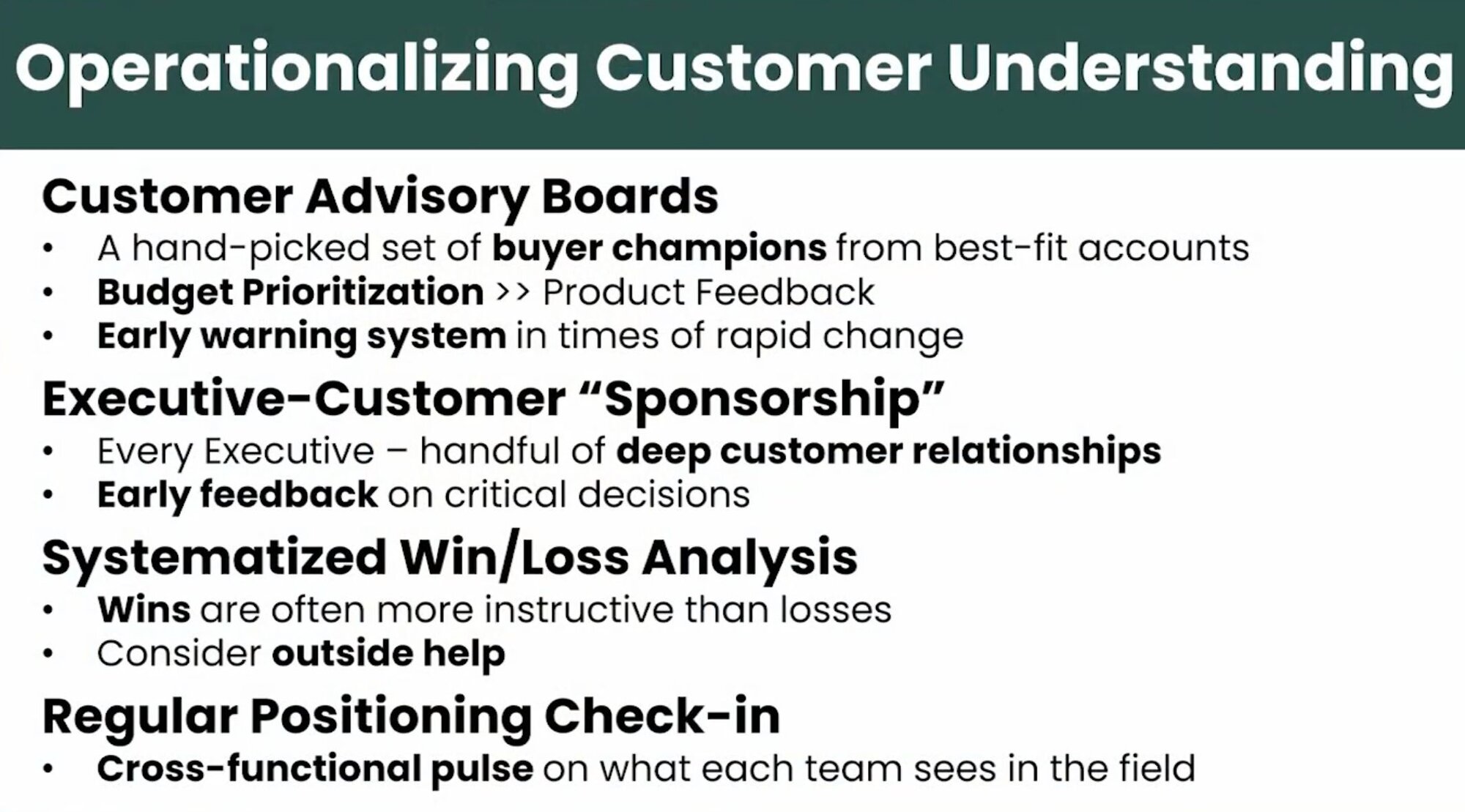
Closing out the session, April shares that customer research isn’t a novel idea, but she believes that almost nobody is doing it on a cadence.
"Every single person that stood on this stage today said talk to your customers. But this is like systematic stuff everyone should be doing. Are you all doing it?"
